A do not call register dialler setup is not a single piece of software. It is a workflow: a wash against the Do Not Call Register (DNCR), a clean list, a dialler that only calls what you give it, and records that show what you did and when. Most Australian sales teams that get into trouble with the register do not set out to break the rules. They lose track of which list was washed, when, and by whom, and an old spreadsheet ends up back in the dialler.
This guide walks through where the register fits around a power dialler, step by step: what the register is for, how a wash works, how long a wash lasts, how to keep washed and unwashed data apart, and what to look for in a dialler so the workflow stays tidy. It is general information, not legal advice. For your own obligations, read the official guidance on donotcall.gov.au and speak to an adviser.
What a do not call register dialler workflow actually involves
The register is a list you check, not a call blocker
The Do Not Call Register lets Australians register home phones, personal mobiles and fax numbers to reduce telemarketing. ACMA's own Do Not Call Register page explains that the register does not block calls: it lets businesses check their calling lists and remove registered numbers before they call. That one sentence explains the whole do not call register dialler workflow. Nothing in the phone network stops a dialler from ringing a registered number. The check has to happen in your process, before the dial.
Who carries the obligation
The register's industry FAQs say both the person making a telemarketing call and the business that requires the call to be made must comply with the legislation. If you outsource calling, or hand lists to contractors, the obligation does not move off your business. For a do not call register dialler process, that means the team lead or owner needs to know which lists went into the dialler and whether each one was washed.
What your dialler does and does not do
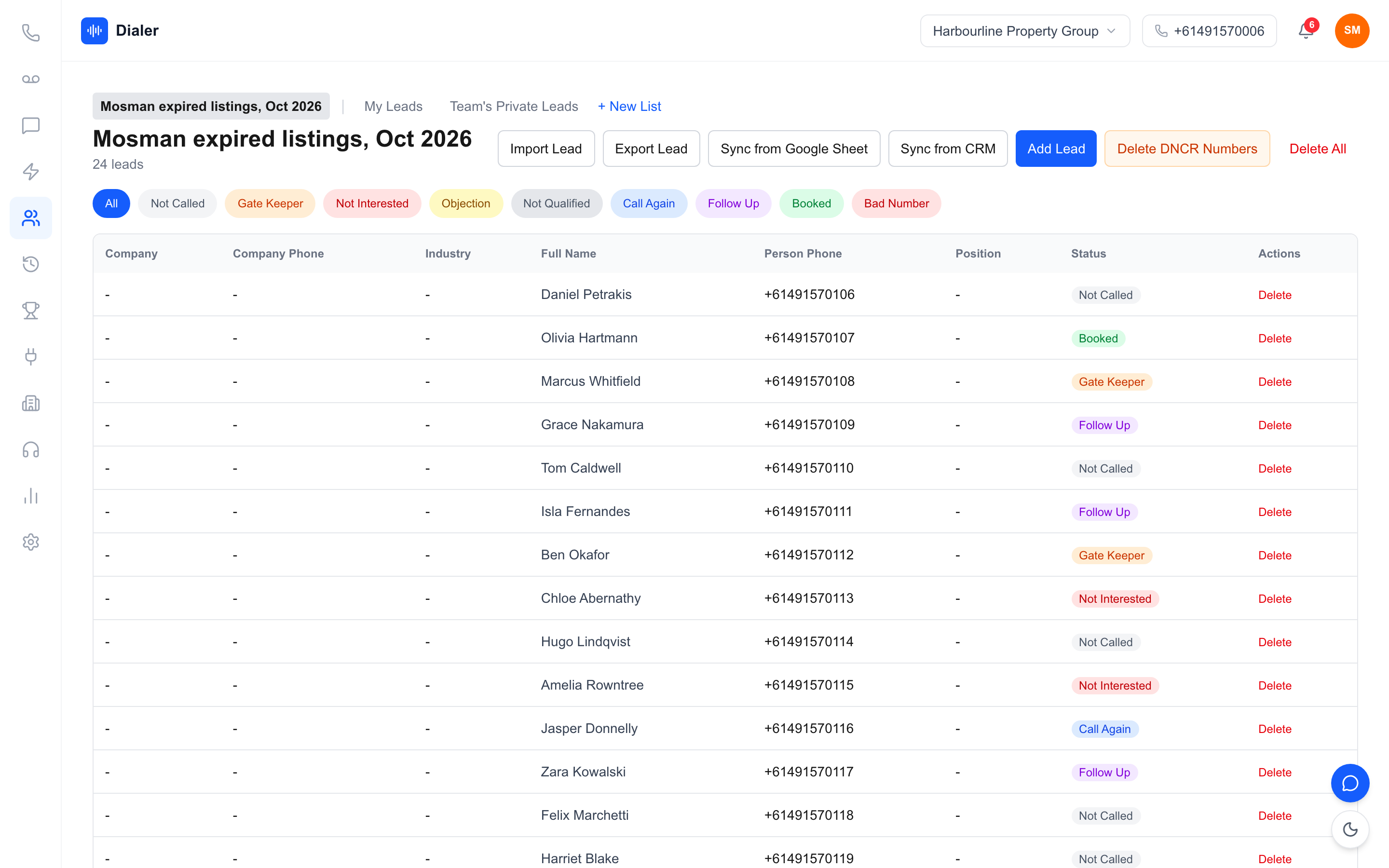
A power dialler rings the numbers in the list you load, one after another, and hands the answered call to a rep. It does not know whether a number is registered unless your wash tells it. Some tools offer a built-in check against the register; Veyce does not. Veyce works with your wash: numbers the wash marks as registered are left out of PriceFinder imports, and the Delete DNCR Numbers button clears flagged leads. Either way, in any do not call register dialler set-up the wash itself is your step.
How a DNCR wash works before the dialler
Getting access to wash
To wash lists, the register's washing process overview says you need to create an account and buy a subscription. Small checks are possible too: the industry FAQs describe a Quick check facility for fewer than 10 numbers. For a sales team loading hundreds or thousands of leads a week, a subscription and a regular washing routine is the practical path.
The 30-day window
Timing is where most teams slip. The register's industry FAQs say that if a marketer washed its list in the 30 days before a call, and the register did not show the number as registered, the marketer will not be in breach. Read the other way, a list washed six weeks ago gives you no such cover. Build the date into your do not call register dialler routine: write the wash date on the file name, record it against the list in your dialler, and re-wash before anyone dials a list older than 30 days.
Consent and exempt callers
Washing is not the only route to calling a number. Express consent is one, and ACMA's guidance on using the register says express consent given without a set period is taken to expire three months after it was given. Some organisations, such as registered charities, have exemptions for certain calls. If your list relies on consent or an exemption rather than a wash, keep the evidence with the list and check the rules on donotcall.gov.au before relying on it. Start a free 7-day Veyce trial with 50 calling minutes included.
Keeping washed and unwashed data apart
One source of truth for every list
The safest do not call register dialler set-up is boring. Every list gets one master file, a wash date and an owner. Reps never upload their own spreadsheets straight into the dialler, and nobody merges an old export into a freshly washed one. If a rep finds a great lead list at a networking event, it goes to the list owner, gets washed, and comes back in as a new list with its own date.
Clearing flagged leads after a wash
When a wash comes back, the registered numbers need to leave the calling list, not just get a tag nobody reads. In practice that means either importing only the clean rows or deleting the flagged rows inside the dialler before a session starts. Do it before the session, not halfway through, so a rep never sees a flagged lead on screen.
Re-washing lists you keep calling
Real estate and solar teams often work the same suburb lists for months. Every 30 days, export the remaining uncalled numbers, wash them again and re-import or clear the newly flagged rows. Worked example, with assumptions stated: a team calling 2,000 numbers in a suburb over eight weeks needs at least two washes of the remaining numbers, not one wash at the start. Set a calendar reminder per list rather than relying on memory.
Records that back up your process
What to keep
If a complaint arrives, your do not call register dialler records need to show what happened. Keep the wash result file and its date, the list that went into the dialler, call times and outcomes for the number, and any consent evidence. The register's Compliance and Breaches page explains how ACMA handles breaches and the penalties that can apply, which is a good reason to keep these records tidy and easy to find.
Calling hours sit alongside the register
The register is only one set of rules. The Telemarketing and Research Calls Industry Standard 2017 sets calling hours, caller identification and call-ending rules. The register's industry standards page summarises the hours for telemarketing calls as weekdays 9am to 8pm and Saturdays 9am to 5pm, with no calls on Sundays or national public holidays unless the consumer has agreed to a call at that time. Our DNCR compliance guide for Australian businesses covers the register rules in more depth.
Handling "please don't call me again"
Even on a washed list, people will ask not to be called. The industry standard says a call must end when the person asks. Add a clear outcome in your dialler for "do not call again", train reps to use it, and remove those numbers from every future list, not just the current one.
Veyce: a power dialler that works with your wash
How Veyce handles DNCR flags
Veyce is a power dialler for Australian sales teams. It does not wash or check numbers against the register. It works with your wash: numbers the wash marks as registered are left out of PriceFinder imports, and the Delete DNCR Numbers button clears flagged leads. Your team still runs the wash and owns the result; Veyce makes it easy to keep flagged numbers out of the calling list.
Calling, recording and follow-up
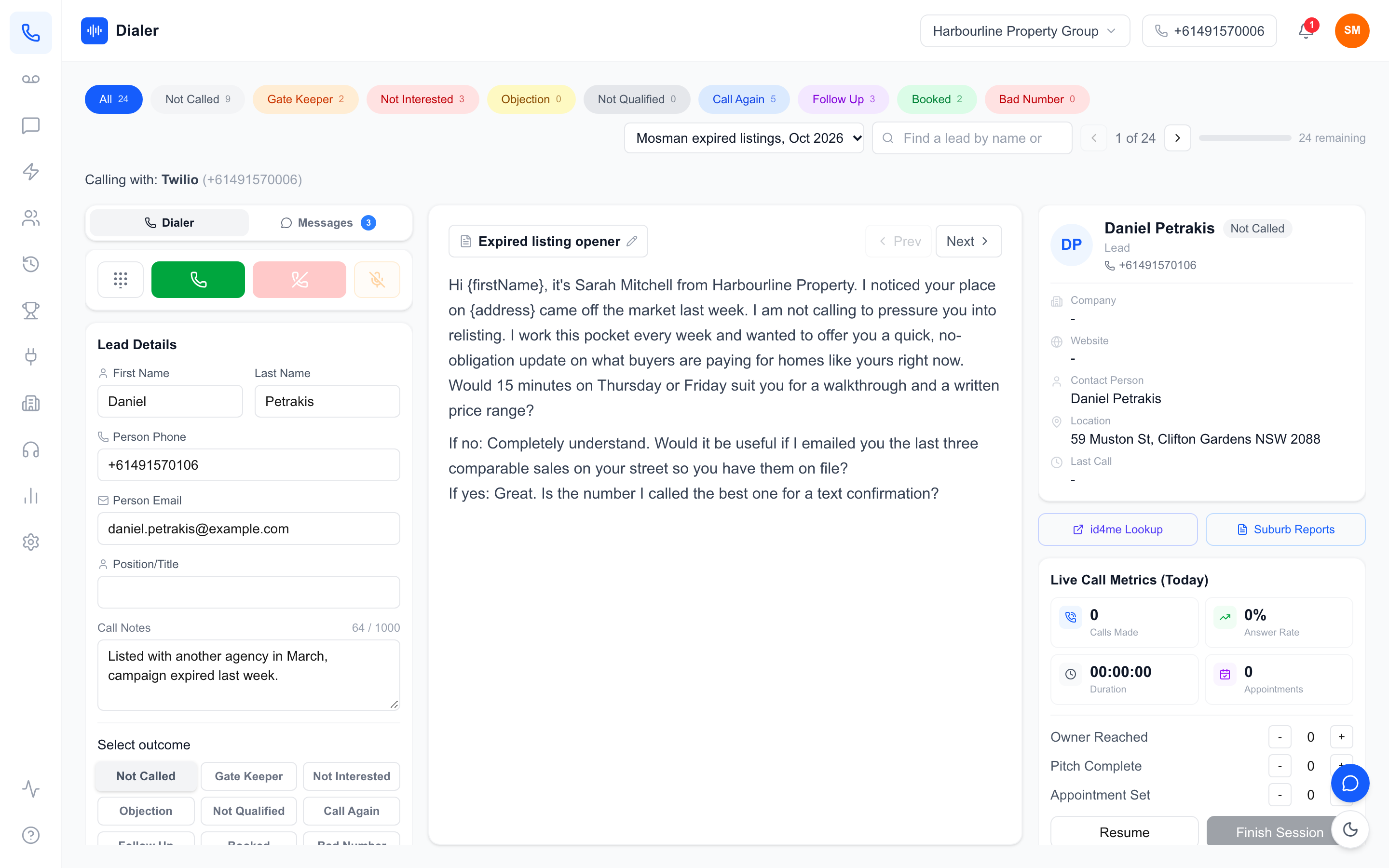
In Power Dialler mode, Veyce rings one lead at a time, so every answered call goes straight to a rep. Calls go out from your team's dedicated Australian number, and Veyce can assign a rep their own Australian number on request. Recorded calls get an AI transcription and summary after the call, and the SMS inbox keeps texts on the team number. You can see the full feature set on the Veyce power dialler for Australian teams page.
Parallel Dialer and calling hours
On Growth and Agency, the optional Parallel Dialer add-on (+$99 a seat) rings up to 5 leads at once on Growth and up to 10 on Agency. It only places calls weekdays 9am–8pm and Saturdays 9am–5pm, in the lead's local time, and not on Sundays or national public holidays. That describes how the add-on behaves; it does not replace your own wash or your own check of the rules.
Conclusion: make the wash a step nobody can skip
A do not call register dialler workflow works when the wash is a fixed step between "we have a list" and "we are dialling it", with a date on every list and a re-wash before day 30. The dialler's job is to call cleanly and quickly what you give it, and to make flagged numbers easy to remove. If you want to see how that looks with a real list, compare Veyce plans and per-team pricing or start a free 3-day trial, counted from your first call, with 100 calling minutes and no card.
Frequently asked questions
Does a dialler check numbers against the Do Not Call Register?
Some do and some do not. A dialler only rings the numbers you load, so unless it has a built-in check, the wash is a separate step you run through a Do Not Call Register subscription. Veyce does not wash or check numbers. It works with your wash: numbers the wash marks as registered are left out of PriceFinder imports, and the Delete DNCR Numbers button clears flagged leads. This is general information, so confirm your own obligations on donotcall.gov.au.
How long does a DNCR wash last?
The register's industry FAQs say that if you washed your list in the 30 days before a call and the register did not show the number as registered, you will not be in breach. After 30 days that cover lapses, so treat any list older than a month as unwashed. Put the wash date on the file name and against the list in your dialler, and re-wash the uncalled numbers before anyone dials them again.
Can I call business numbers on the Do Not Call Register?
ACMA says business phone numbers cannot be added to the register, although a number used for both business and personal calls can be registered if personal use is more than half. In practice, many B2B lists include mobiles that are also personal phones. Washing the whole list is the simplest way to avoid guessing which numbers are business-only. Check the details on acma.gov.au and donotcall.gov.au for your situation.
What should I do when someone asks not to be called again?
End the call politely, which the Telemarketing and Research Calls Industry Standard 2017 requires when a person asks. Then log a clear do not call again outcome in your dialler and remove the number from every future list, not just the one you are working. Keep a central suppression list that the list owner checks before each import, so the number never comes back through an old spreadsheet.
Who is responsible if a contractor calls a registered number for us?
The register's industry FAQs say both the person making the call and the business requiring it must comply with the legislation, and that contracts with third-party telemarketers should include provisions to comply. Outsourcing does not move the obligation off your business. Give contractors only washed lists with a recorded date, and ask for their call records. This is general information, not legal advice, so check your contracts with an adviser.