This ACMA telemarketing compliance guide is a map of the regulator and the rules it enforces, written for Australian sales teams that make outbound calls and send follow-up texts. Most guides jump straight to the Do Not Call Register. That matters, but the Australian Communications and Media Authority (ACMA) also enforces calling hours, caller identification and call-ending rules, plus the spam rules that cover the texts and emails a sales team sends after a call.
The aim of this ACMA telemarketing compliance guide is to show how the pieces fit: which law covers what, what ACMA actually does when it finds a problem, and how a small sales team can turn that into a working routine. It is general information, not legal advice. Every rule below links to its source on acma.gov.au, donotcall.gov.au or legislation.gov.au, and you should confirm how it applies to your business with an adviser.
Who ACMA is and what it enforces for telemarketing
The regulator behind the register
ACMA is the federal regulator for communications, including telemarketing and spam. Its action on scams, spam and telemarketing page explains that it provides the Do Not Call Register, promotes responsible industry practice, and monitors and enforces compliance. It relies on complaints, reports and industry feedback to decide where to act, and it publishes quarterly reports on the action it takes.
Three sets of rules for sales teams
For a typical outbound sales team, three instruments do most of the work, and the rest of this ACMA telemarketing compliance guide follows them in order:
- The Do Not Call Register Act 2006: when you can make telemarketing calls to registered numbers.
- The Telemarketing and Research Calls Industry Standard 2017: calling hours, caller identification, information you must give and when a call must end. It applies to telemarketing calls whether or not the number is registered.
- The Spam Act 2003: commercial texts and emails, including the follow-up SMS a rep sends after a call.
Many teams only think about the first. A clean, washed list still has to be called at the right times, by reps who identify themselves and end calls when asked.
How ACMA responds to breaches
ACMA's investigations page lists what it can do where it finds a breach: take the matter to the Federal Court, give an infringement notice, issue a formal warning, or accept a court-enforceable undertaking. The register's Compliance and Breaches page sets out the penalty amounts, which change over time, so check the current figures there rather than relying on a number in a blog post.
The Do Not Call Register rules in brief
Registered numbers and the wash
People can register home phones, personal mobiles and fax numbers. ACMA's Do Not Call Register page says the register does not block calls; it lets businesses check their lists and remove registered numbers before calling. That check is called a wash, and the register's industry FAQs say a wash in the 30 days before a call, where the register did not show the number as registered, means you will not be in breach.
Consent and exemptions
You can call a registered number with the person's consent, and some organisations have exemptions for certain calls. ACMA's guidance on using the register says express consent with no set period is taken to expire three months after it was given. ACMA has also published a statement of expectations on consent for telemarketing and e-marketing, which is worth reading before you design any consent form or script.
Responsibility when you outsource
The industry FAQs say both the person making a call and the business requiring it must comply, and that contracts with third-party callers should include provisions to comply. We cover washing, consent and record keeping step by step in our DNCR compliance guide for Australian businesses. Start a free 7-day Veyce trial with 50 calling minutes included.
The industry standard: hours, identification and ending calls
Calling hours
The register's industry standards page summarises telemarketing calling hours as weekdays 9am to 8pm and Saturdays 9am to 5pm, with no calls on Sundays or national public holidays unless the consumer has agreed to a call at that time. Research calls have different hours. The hours are the recipient's local time, so a national list needs planning around time zones.
Caller identification and information
The same page says calling line identification must be enabled on every call, and that a return-contact number must remain available for at least 30 days so a person can find out who called and why. The standard also sets out information the caller must give during the call. In plain terms: say who you are, who you work for and why you are calling, and make sure the number on the screen leads somewhere.
When a call must end
A caller must end the call immediately if the person asks, or otherwise indicates they do not want to continue. Reps should end politely without a second attempt at the pitch, and the number should go on a suppression list so it is not called again from another list.
Spam rules for follow-up texts and emails
Consent, identification and unsubscribe
ACMA's avoid sending spam page says you need consent before sending a marketing message, must identify yourself as the sender with your contact details, and must make it easy to unsubscribe. It also says you cannot send an electronic message to ask for consent, because that message is itself marketing. For sales teams, the simplest habit is asking on the call: "Is it okay if I text you the details?" and logging the answer.
Common mistakes ACMA has flagged
ACMA's page on telemarketing and e-marketing common issues and mistakes lists problems it keeps seeing. Several apply directly to sales teams: unsubscribe processes that ask people to reply to an SMS sender ID they cannot reply to, "welcome journey" messages sent without adequate consent, and messages labelled as service messages that also carry commercial content. Read the page once a year and check your own texts against it. Pay particular attention to automated sequences: a text that goes out from a template days after a call is still a marketing message, and still needs consent and a working unsubscribe.
Keeping proof of consent
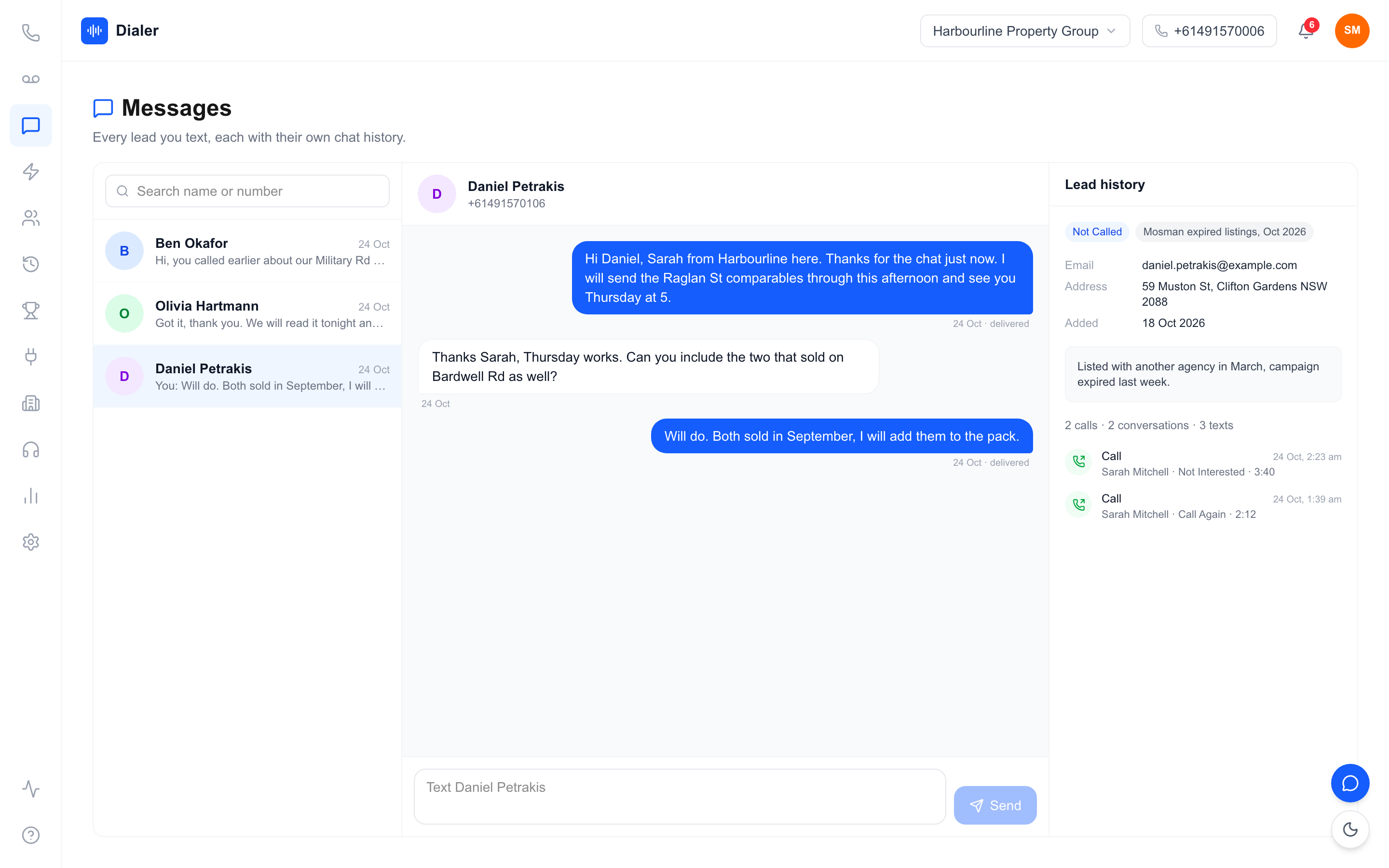
Under the spam rules, ACMA says it is up to you to prove you had consent. Record who gave it, when and how, and keep it with the lead record so anyone on the team can find it.
Veyce: what the dialler does and what stays with you
Working with your wash
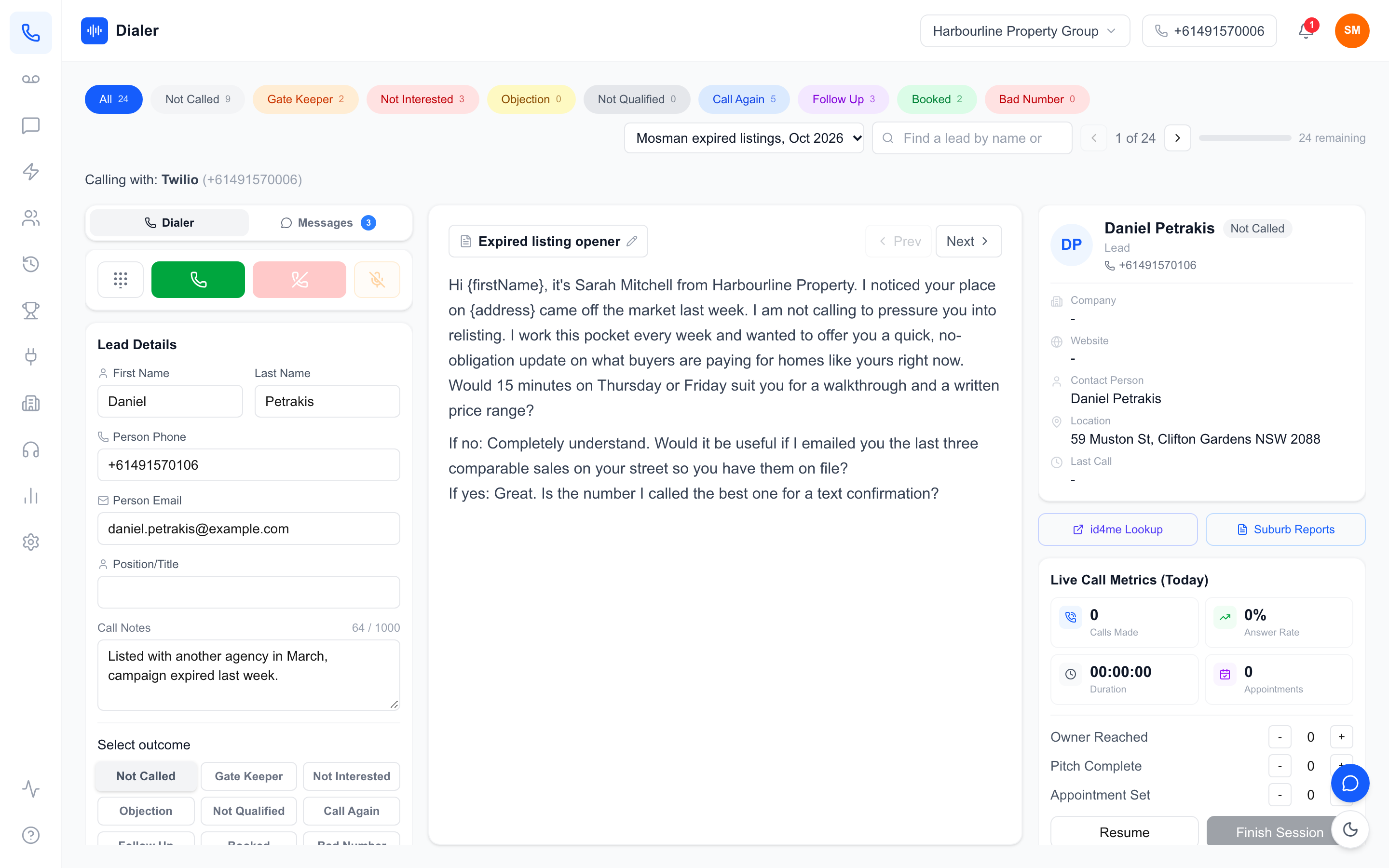
Veyce is a power dialler for Australian sales teams, not a compliance service. It works with your wash: numbers the wash marks as registered are left out of PriceFinder imports, and the Delete DNCR Numbers button clears flagged leads. The wash, consent records and calling-hours planning stay with your team.
Calls, texts and records in one place
In Power Dialler mode, Veyce rings one lead at a time and logs each call, outcome and recording against the lead. Calls and texts go out from your team's dedicated Australian number, and Veyce assigns a rep their own Australian number on request. On the Team, Growth and Agency plans, recorded calls get an AI transcription and summary after the call, and the SMS inbox keeps every text thread with the lead. More on the Veyce power dialler for Australian sales teams.
Parallel Dialer calling hours
The optional Parallel Dialer add-on on Growth and Agency (+$99 a seat) rings up to 5 leads at once on Growth and up to 10 on Agency. It only places calls weekdays 9am–8pm and Saturdays 9am–5pm, in the lead's local time, and not on Sundays or national public holidays. That is how the add-on behaves; your own obligations still need your own checks.
Conclusion: use this ACMA telemarketing compliance guide as a routine
ACMA telemarketing compliance comes down to three habits: wash and date every list under the Do Not Call Register rules, call within the industry standard's hours with honest identification and a clean exit, and treat follow-up texts as marketing that needs consent and an unsubscribe. Keep records that prove each step, and revisit this ACMA telemarketing compliance guide and the official pages whenever you change how you source leads or contact them. If you are choosing a dialler to support that routine, compare Veyce plans and pricing, or try Veyce with a free 3-day trial, counted from your first call, with 100 calling minutes and no card.
Frequently asked questions
What does ACMA regulate for telemarketing?
ACMA runs the Do Not Call Register and enforces the Do Not Call Register Act 2006, the Telemarketing and Research Calls Industry Standard 2017 and the Spam Act 2003. Together they cover calling registered numbers, calling hours, caller identification, ending calls and commercial texts and emails. This is general information, not legal advice, so check acma.gov.au and donotcall.gov.au for how each applies to your business, and speak to an adviser.
Do the calling hours apply if a number is not on the Do Not Call Register?
The register's industry standards page describes the calling hours as part of the Telemarketing and Research Calls Industry Standard 2017, which applies to telemarketing calls generally, not only to registered numbers. It summarises the hours as weekdays 9am to 8pm and Saturdays 9am to 5pm, with no Sunday or national public holiday calls unless the consumer has agreed. Confirm the detail in the standard on legislation.gov.au.
Can my reps send a text after a cold call?
A follow-up marketing text falls under the Spam Act. ACMA's guidance says you need consent, must identify the sender with contact details, and must make it easy to unsubscribe. You cannot send a text to ask for consent, since that text is itself marketing. The practical approach is to ask on the call whether the person is happy to receive a text, then log their answer with the lead.
Does using a dialler change our telemarketing obligations?
No. Your obligations depend on how you source leads, wash lists, record consent, plan calling times, run calls and keep records, whatever software you use. A dialler can make parts of that routine easier, such as clearing flagged leads or keeping call and text history with each lead. Be cautious of any claim that software alone takes care of your obligations. Veyce works with your wash rather than replacing it.
What happens if ACMA finds a breach?
ACMA's investigations page says it can take a matter to the Federal Court, give an infringement notice, issue a formal warning or accept a court-enforceable undertaking. It publishes investigation reports and quarterly summaries of its actions. The penalty amounts change, so read the current figures on the Do Not Call Register's Compliance and Breaches page rather than relying on an old article.