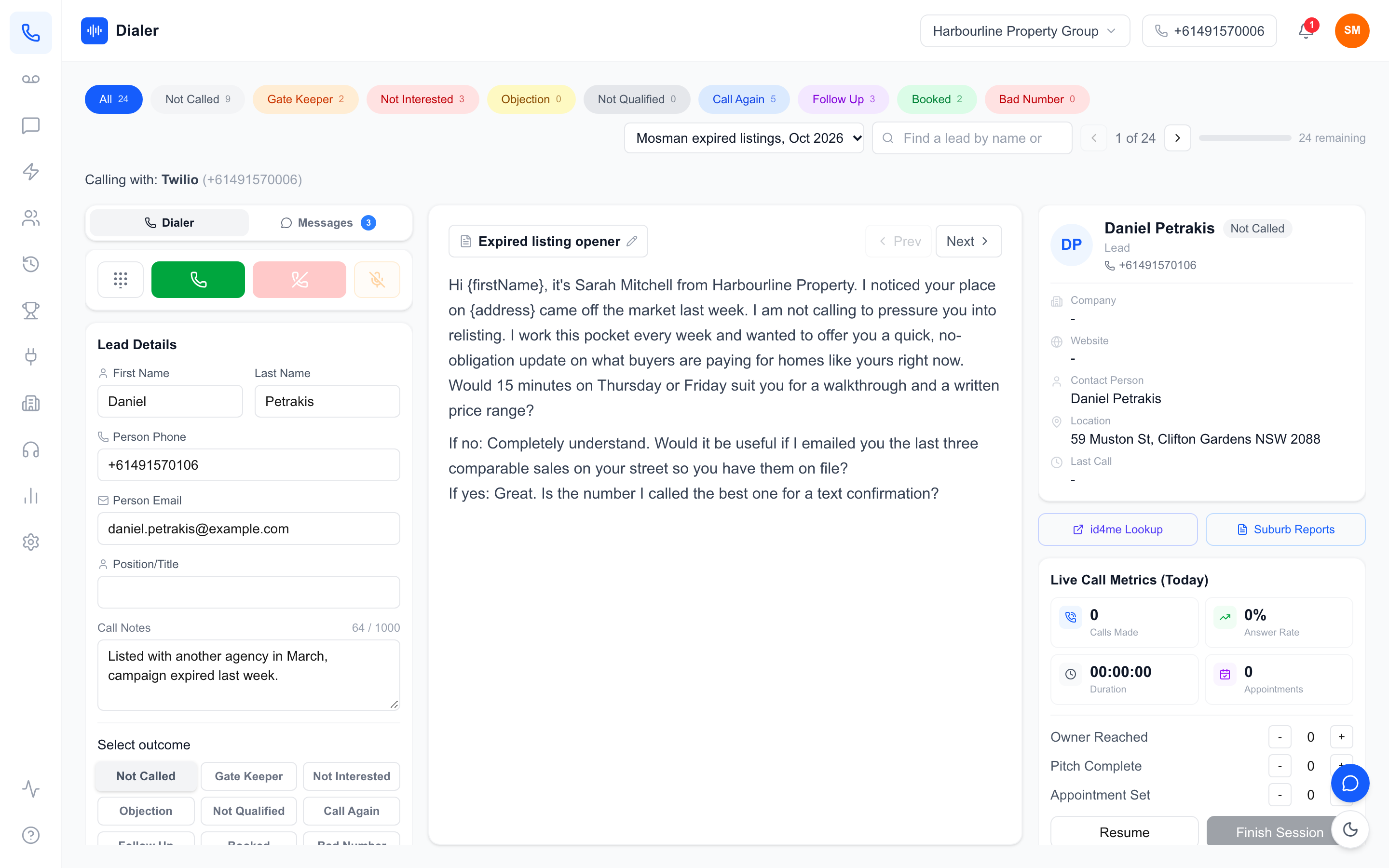
Finding a managed outbound dialler service Australia sales teams can rely on usually means replacing the patchwork many sales teams grew into: mobiles on company plans, a desk phone or two, maybe calling software bolted onto a separate voice provider, and notes kept in a spreadsheet. That setup works until the team grows past a couple of reps. Then nobody can see who called whom, callbacks go to the wrong person, and the monthly bills arrive from three places.
This guide is for team leaders and owners planning that switch. It covers the signs your current telco setup is holding outbound calling back, what actually changes when you move to a managed service, a four-step plan for switching without losing a week of calls, and a worksheet for comparing costs honestly. It applies whichever provider you choose, and if you want the definition first, our guide to what a managed power dialler includes covers it.
Signs your telco setup is holding outbound back
Calls live on personal mobiles
When reps call from their own mobiles or individual company SIMs, every call history lives on a different phone. Leads ring back a rep who is on leave. A rep leaves and their callbacks leave with them. There is no shared record of what was said, so the next person starts cold.
Two bills and a part-time IT job
Teams that bolted calling software onto a voice provider usually pay a software licence plus separate call charges and number fees. Someone in the office ends up owning the carrier account, chasing outages and working out why recordings stopped saving. That person was hired to sell or manage, not to run telephony.
No recordings, no visibility
Without recording and session reports, a manager only knows what reps say happened. Training a new starter means sitting beside them. Disputes about what was promised on a call come down to memory. If any of this sounds familiar, the phone setup, not the team, is often the bottleneck.
What changes with a managed outbound dialler service Australia teams use
Numbers and caller ID
Any managed outbound dialler service Australia teams consider should supply the Australian number your leads see, so outbound calls show one consistent local number that rings back to your team. Before switching, list the numbers leads currently know: existing customers may have a rep's mobile saved. Ask the provider whether an existing number can move across; if not, plan a short message to active leads and keep the old numbers answered for a while.
Minutes and billing
Instead of a carrier bill that changes every month, a managed service bundles calling minutes into the plan, often as a pool shared by the whole team. Find out the size of the pool, what top-ups cost when it runs out and whether texting is billed separately. Predictable is the goal, not necessarily cheapest. Ask too whether the plan has a lock-in period, how seats are added and removed as the team changes size, and whether recordings stay available if you leave. A good managed outbound dialler service Australia buyers can trust answers those questions on a public page rather than in a sales call.
Recording, notes and follow-up
Calls made through the dialler can be recorded and attached to the lead, outcomes are logged as reps go, and callbacks become tasks rather than memories. This is usually the biggest day-to-day change for reps, and the reason they stop resisting the switch after the first week.
What does not change: your reps make the calls
A managed outbound dialler service manages the technology. It is not an outsourced calling service or a call centre that phones leads on your behalf. Your own reps make every call, in your voice, to your lists. Your business also stays responsible for washing lists against the Do Not Call Register and following the telemarketing industry standards on calling times.
A four-step plan for switching
Step 1: audit what you pay and use now
Pull three months of bills: software, carrier, number fees and each company mobile used for sales. Note roughly how many outbound minutes the team uses a month. The worksheet below turns that into a like-for-like comparison.
| Line item | Current setup (monthly) | Managed service (monthly) |
|---|---|---|
| Calling software licences | your figure | included in plan |
| Carrier call charges | your figure | minute pool, plus top-ups if needed |
| Number fees | your figure | team number included |
| Sales mobiles and SIMs | your figure | not needed for dialling |
| Recording storage | your figure | included |
As a worked example only, assume four reps who between them use about 400 outbound minutes a month. On Veyce that fits the Team plan at $179 a month for 4 seats and 400 minutes. If the same team actually uses 1,000 minutes, the Team plan plus a 1,000-minute top-up at $250 is the fair comparison, not the headline price alone.
Step 2: run both side by side for a week
Keep the old setup live while one or two reps run sessions on the managed service with a washed list. Compare calls made, conversations and callbacks set. Running in parallel removes the risk of a dead week if something needs fixing. Ask the reps what slowed them down, check that callbacks reached the right person, and listen to a few recordings together. Fix those small things now, while only two people are affected.
Step 3: move lists, scripts and callbacks
Export open leads and booked callbacks from wherever they live now, wash them and import them. Turn the best-performing script into one screen of prompts. Agree outcome labels so reports mean the same thing for every rep.
Step 4: cut over, then close old services carefully
Move the rest of the team across on a Monday, keep old numbers answered until callbacks taper off, then check your carrier contract terms before cancelling anything. Some contracts carry notice periods, so read them before the switch date.
Veyce: a managed outbound dialler service Australia teams run themselves
Number, minutes and texting
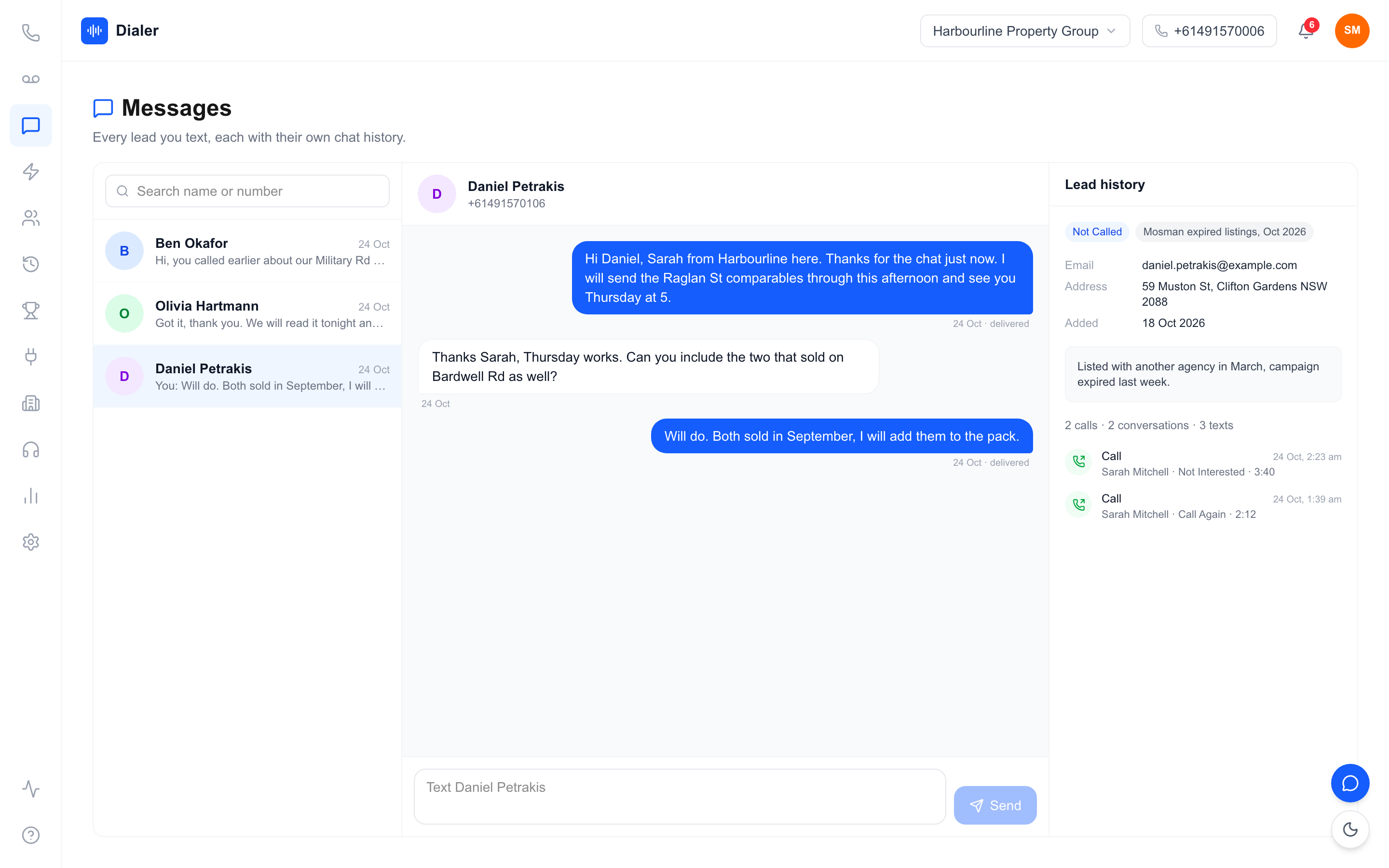
Veyce is a managed outbound dialler for Australian sales teams. Your team gets one dedicated Australian number included, and Veyce assigns a rep their own Australian number on request, so that rep's calls and texts go out from it and callbacks ring them first, then the team. Minutes are included on every plan as a shared pool, and reps can text leads from the team number through an SMS inbox.
Calling, recording and summaries
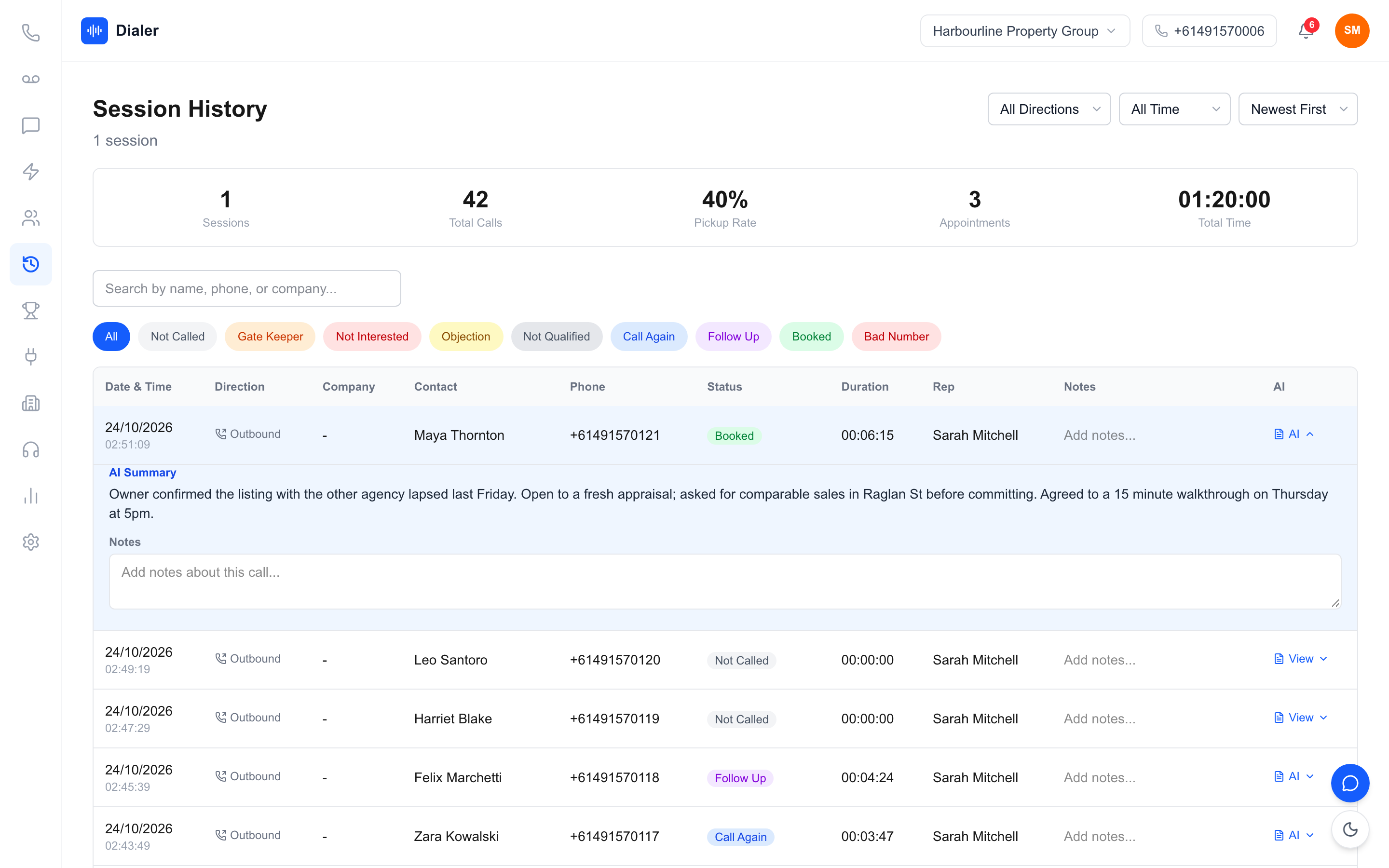
In Power Dialler mode, Veyce rings one lead at a time for each rep and moves to the next when the rep logs an outcome. Calls can be recorded, and recorded calls get an AI transcript and summary after the call, so a manager can review what was said without replaying everything. Live session metrics and a leaderboard replace guesswork about the day. See how the Veyce power dialler works for Australian teams.
Lists and your wash
Leads come in from spreadsheets, PDFs and photos using OCR and rule-based mapping. Veyce works with your wash: numbers the wash marks as registered are left out of PriceFinder imports, and the Delete DNCR Numbers button clears flagged leads.
Plans
Solo is $49 a month (1 seat, 100 minutes), Team $179 (4 seats, 400 minutes), Growth $449 (10 seats, 1,000 minutes) and Agency $1,099 (25 seats, 2,500 minutes), with extra seats at $29. Compare them on the Veyce plans page.
Conclusion: switch in a week, not a quarter
The short version
Moving from a telco setup to a managed outbound dialler service is mostly a planning job: audit the old costs, run both side by side, move lists and callbacks cleanly, and close old contracts only once callbacks have moved. Your reps keep making the calls; they just stop fighting the phone system to do it.
Your next step
Run step 2 on a trial before you commit. A Veyce free trial gives you 3 days from your first call and 100 calling minutes with no card, enough for one rep to test the switch with a real, washed list. Call recording with AI transcripts and summaries comes on the Team, Growth and Agency plans.
Frequently asked questions
What is a managed outbound dialler service?
It is calling software that comes with the phone side included: the Australian number, calling minutes, recording and connection are supplied as part of one plan, so there is no carrier account, SIP trunk or hardware to manage. It is a managed technology service, not an outsourced calling service. Your own reps still make every call to your own lists, and the service gives them the dialler, the number and the records.
Can we keep our existing phone numbers when we switch?
Ask each provider directly, because the answer varies. With Veyce, your team gets a dedicated Australian number included and Veyce assigns a rep their own Australian number on request. If your current numbers stay with your old provider, keep them answered for a few weeks after the switch, send active leads a short note about the new number, and only cancel once callbacks to the old numbers have tapered off.
Is a managed dialler cheaper than a telco setup?
Sometimes, but compare like for like. Add up software licences, carrier charges, number fees, sales mobiles and recording storage for the last three months, then compare that with the managed plan plus any minute top-ups your usage needs. For example, a team using about 1,000 minutes a month on Veyce's Team plan would add a 1,000-minute top-up at $250 to the $179 plan. Predictable billing is often the bigger win.
Does a managed outbound dialler service make calls for us?
No. Managed refers to the technology, not the people. A managed outbound dialler service is not a call centre and it does not phone leads on your behalf. Your reps make every call, and the service supplies the dialler, the Australian number, the minutes and the recordings. If you want someone else to make the calls, you are looking for an outsourced telemarketing provider, which is a different kind of business.
How long does switching from a telco setup take?
Plan on about a week for a small team. Spend a day auditing current bills and usage, run one or two reps on the managed service alongside the old setup for a few days, then move lists, scripts and callbacks before cutting the whole team over. Keep old numbers answered until callbacks stop arriving, and check carrier contract notice periods before cancelling any service.