Power dialler vs predictive dialler is the first fork in the road when an Australian sales team moves off manual dialling. Both remove the time reps spend keying numbers and waiting on ringtones. They differ in one design choice: whether the software waits for a rep to be free before it dials, or dials ahead and bets that someone will be free when a person answers. In the power dialler vs predictive dialler decision, that one choice shapes the experience for the person you are calling, the team size each suits, and the risks you take on.
This post explains how each type paces calls, what happens on the lead's end of the line, the maths that makes predictive dialling worth it for big floors and wasteful for small teams, and the Australian rules worth keeping in mind. If you are still comparing broader categories, our power dialer vs auto dialer guide covers the wider family of auto diallers.
How each dialler decides when to call
Power dialler: dial when the rep is ready
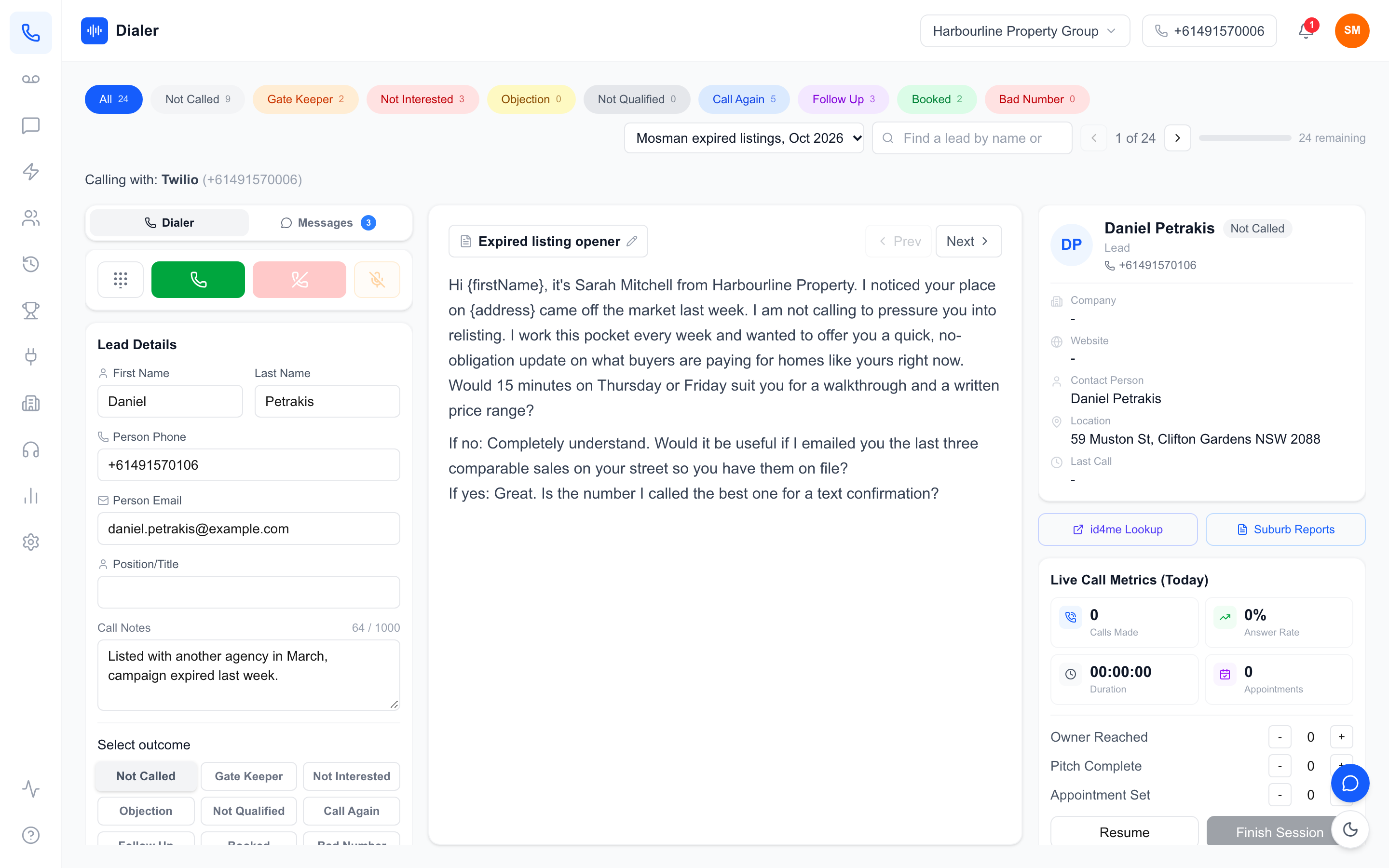
A power dialler works through a list one number after another for each rep. When the rep finishes a call and logs the outcome, the dialler rings the next lead. The ratio is fixed: one line per available rep. If the lead answers, the rep is already there and hears them say hello. If nobody answers, the dialler moves on and the rep has lost a few seconds, not minutes.
Predictive dialler: dial ahead of availability
A predictive dialler rings several numbers at once per available agent, using an algorithm that estimates how many calls will be answered and when agents will finish their current calls. The aim is that an agent finishes a call just as a new person picks up, so agents spend nearly all of their time talking. The system adjusts its pace as answer rates change through the day.
The middle ground: multi-line diallers
Some products sit between the two. They let one rep ring a fixed number of lines at once and talk to whoever answers. According to each vendor's own pricing page (checked 22 October 2026), Kixie offers a Multi-Line PowerDialer (up to 4 lines at once) and Mojo a Triple Line Dialer, while JustCall's SalesPro tier adds dynamic and predictive dialling and Readymode is built around a predictive dialler for call-centre volumes. These are different designs from a classic predictive dialler, which paces across a whole team.
What the lead hears on each type
The answered call with nobody there
The risk with dialling ahead is simple: sometimes more people answer than there are free agents. The dialler then has to hold, drop or hang up on those calls. From the lead's side, that is a phone that rings, a "hello?" and silence, or a click. Predictive systems tune their pacing to keep this low, but the trade-off between agent idle time and dropped answers never fully disappears.
The connection delay
Even when an agent is free, a predictive system takes a moment to detect a human and route the call. Leads often notice the short pause before a voice comes on, and many people now associate it with call centres. A power dialler avoids most of it because the rep is already on the line when the lead picks up.
Why it matters for the conversation
This is where the power dialler vs predictive dialler gap is easiest to feel. The first three seconds of a cold call set the tone. A rep who hears the lead answer can respond naturally to how they sound. A rep who joins mid-"hello" starts on the back foot. For B2B, real estate, solar and finance teams that rely on rapport, the power dialler experience usually suits the conversation better. Start a free 7-day Veyce trial with 50 calling minutes included.
The maths: team size and talk time
Where predictive dialling pays off
Predictive dialling earns its keep when there are enough agents for the algorithm to pool. With many agents on a shift, the chance that someone frees up at the right moment is high, so the dialler can dial ahead with fewer dropped answers. Large floors running high-volume campaigns, where agent utilisation drives cost, are the traditional fit.
Why small teams lose out
With two to ten reps, the pool is small. The dialler either dials cautiously, which brings it close to power dialling anyway, or dials aggressively and drops more answered calls. Worked example, with assumptions stated: a team of four reps, a 10% answer rate and 3-minute average conversations. A power dialler needs about ten dials per conversation per rep, so at 30 seconds per unanswered attempt, a rep spends roughly 5 minutes dialling for every 3 minutes talking. A predictive dialler could cut that idle time, but with only four agents, a burst of three answers at once means some calls drop. The numbers are illustrative only; your answer rate and call lengths will differ.
Lead lists are finite
Australian sales teams rarely have unlimited fresh data. A suburb list, a solar enquiry export or a broker's database is worth more than the minutes saved by burning through it faster. Dropping an answered call on a good lead wastes the lead, not just the dial. That pushes most small and mid-size teams toward a power dialler or a per-rep multi-line option.
Questions to ask before you choose
Before settling the power dialler vs predictive dialler question, write down four numbers for your team: reps on a typical shift, leads available per month, your current answer rate and your average conversation length. Then ask each vendor how their dialler behaves with those numbers, what happens when more people answer than there are free reps, and how you can see dropped or held calls in reports. A vendor who answers those questions clearly is easier to trust than one who leads with dials per hour.
Australian rules that apply either way
Calling hours and identification
Whatever dialler you use, telemarketing calls fall under the Telemarketing and Research Calls Industry Standard 2017. The register's industry standards page summarises the hours as weekdays 9am to 8pm and Saturdays 9am to 5pm, with no calls on Sundays or national public holidays unless the consumer has agreed. It also requires calling line identification on every call. This is general information, not legal advice.
Washing your lists
Neither dialler type replaces a Do Not Call Register wash. The register's industry FAQs say a wash in the 30 days before a call, where the register did not show the number as registered, means you will not be in breach. Wash, date and re-wash every list on a schedule.
Ending calls properly
The industry standard requires a call to end when the person asks. On a predictive system, think also about how dropped or held calls are handled and what the lead experiences. Ask the vendor directly and check the standard with your adviser before you switch it on. The same applies to any multi-line option: know what the lead hears in every case, including when two people answer at once.
Veyce: a power dialler first, with a parallel option
Power Dialler mode
Veyce is a power dialler, not a predictive dialler. In Power Dialler mode, Veyce rings one lead at a time, so every answered call goes straight to a rep who is already listening. Calls go out from your team's dedicated Australian number, with a rep's own Australian number available on request, and recorded calls get an AI transcription and summary after the call.
The Parallel Dialer add-on
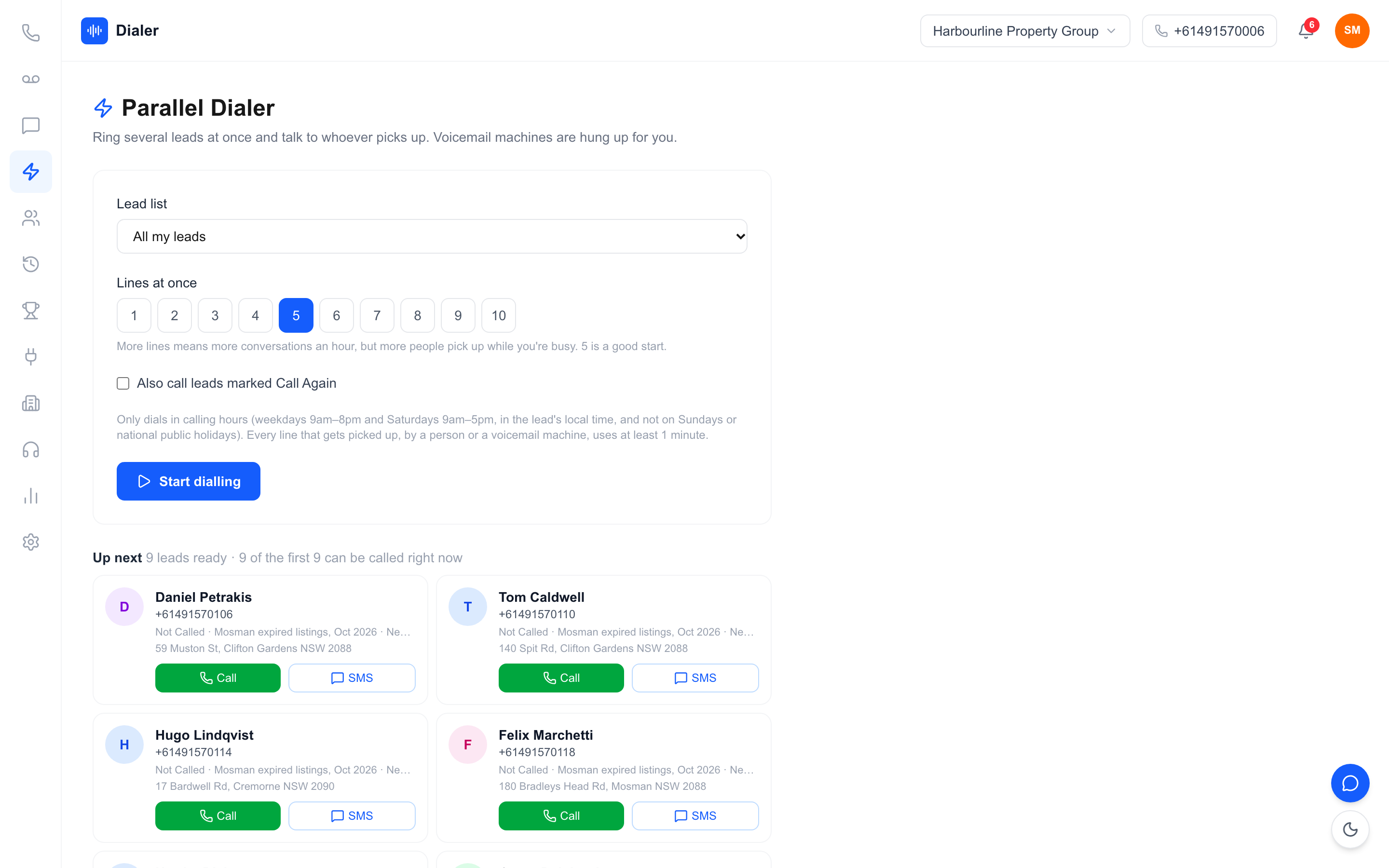
For teams that want more connects per hour, the optional Parallel Dialer add-on on Growth and Agency (+$99 a seat) rings up to 5 leads at once on Growth and up to 10 on Agency. It is a per-rep option with a set line count, not team-wide predictive pacing. It only places calls weekdays 9am–8pm and Saturdays 9am–5pm, in the lead's local time, and not on Sundays or national public holidays.
Lists and the wash
Veyce works with your wash: numbers the wash marks as registered are left out of PriceFinder imports, and the Delete DNCR Numbers button clears flagged leads. See every plan's seats and minutes on our pricing page.
Conclusion: power dialler vs predictive dialler for your team
For most Australian teams under a few dozen reps, the power dialler vs predictive dialler choice comes down to lead experience and list value: a power dialler keeps every answered call with a live rep and protects finite data, while predictive dialling suits large floors where agent utilisation is the main cost. If you need more volume per rep, a per-rep multi-line option sits in between. To try the power dialler approach on a real list, see the Veyce power dialler for Australian teams or start a free 3-day trial, counted from your first call, with 100 calling minutes and no card.
Frequently asked questions
What is the main difference between a power dialler and a predictive dialler?
A power dialler dials one number per available rep and moves to the next lead when the rep finishes, so the rep is on the line when someone answers. A predictive dialler dials several numbers per available agent, using an algorithm to guess when agents will be free. It keeps agents busier but can leave answered calls waiting or dropped when more people pick up than there are free agents.
Is a predictive dialler better for a small sales team?
Usually not. Predictive pacing works best with many agents, because a large pool makes it likely someone frees up when a call is answered. With two to ten reps, the dialler either dials cautiously and behaves much like a power dialler, or dials aggressively and drops more answered calls. Small teams with finite, valuable lead lists tend to get more from a power dialler or a per-rep multi-line option.
What kind of dialler is Veyce?
Veyce is a power dialler for Australian sales teams. In Power Dialler mode, Veyce rings one lead at a time, so every answered call goes straight to a rep. The optional Parallel Dialer add-on on Growth and Agency rings up to 5 leads at once on Growth and up to 10 on Agency for one rep. It only places calls weekdays 9am–8pm and Saturdays 9am–5pm, in the lead's local time, and not on Sundays or national public holidays.
Do Australian calling rules differ between dialler types?
The rules apply to the call, not the software. The Telemarketing and Research Calls Industry Standard 2017 covers calling hours, caller identification and ending calls, and the Do Not Call Register rules cover registered numbers, whichever dialler you use. Check the details on donotcall.gov.au and legislation.gov.au, and ask any predictive dialler vendor how dropped or held calls are handled. This is general information, not legal advice.