Most sales dialer software is built for American teams. The screenshots look great, the demo runs smoothly, and then an Australian sales manager signs up and hits the same three walls: the numbers are wrong, the compliance is wrong, and the bill is wrong.
Your reps end up calling Australian prospects from US or generic-looking numbers that nobody answers. The "compliance features" are built around US rules like the TCPA, not the Do Not Call Register and ACMA calling hours. And the price that looked reasonable per seat turns into something else entirely once you add every rep, convert from US dollars, and find out the features you actually wanted sit in a higher tier.
This guide breaks down what sales dialer software actually does, which features move the numbers for Australian outbound teams, and the Australia-specific requirements that overseas products consistently get wrong.
What sales dialer software actually does
Strip away the marketing and a dialler does one core loop, over and over:
- Import leads. Your list goes in, ideally without hours of spreadsheet cleanup first.
- Dial fast. The software works through the list, connects your rep to the next call, and removes the dead time between dials: no manual number entry, no waiting through rings one keystroke at a time.
- Log outcomes. Every call gets recorded and dispositioned: connected, voicemail, callback, not interested, booked. Nothing relies on a rep's memory or a sticky note.
- Follow up. Callbacks, SMS nudges and second attempts happen on schedule instead of whenever someone remembers.
Everything else is in service of that loop. If a feature doesn't make reps dial faster, log cleaner, or follow up more reliably, it's decoration. Good sales dialer software is measured in connected conversations per rep per day, not in how many dashboards it has.
There's also a distinction worth making early: a power dialler calls one number at a time, with the rep on the line from the moment it connects. A predictive dialler calls several numbers at once and connects whichever answers first, which means some people answer to silence while the system finds a free rep. Those silent calls are a genuine compliance and reputation problem in Australia. For most outbound teams of one to twenty-five reps, power dialling is the right tool: faster than manual dialling, without burning your list's trust.
The features that actually move numbers for AU outbound teams
A dedicated Australian number for every rep
This is the single biggest answer-rate lever you control. Prospects answer numbers that look local and legitimate; they ignore overseas numbers and private caller IDs. Each rep should have their own dedicated Australian number, a local number or an Australian mobile (+614), that stays consistent, so when a prospect calls back or saves the number, it reaches the same rep.
Watch out for software where numbers are an add-on project: you bring your own telco account, configure a third-party carrier, and maintain it yourself. That's a part-time IT job disguised as a feature.
Power dialling, not predictive
As above: one call at a time, rep present from the first hello. You get the speed (the system dials the next lead the moment the previous call wraps) without abandoned and silent calls landing on Australian consumers.
Recording, transcription and AI summaries
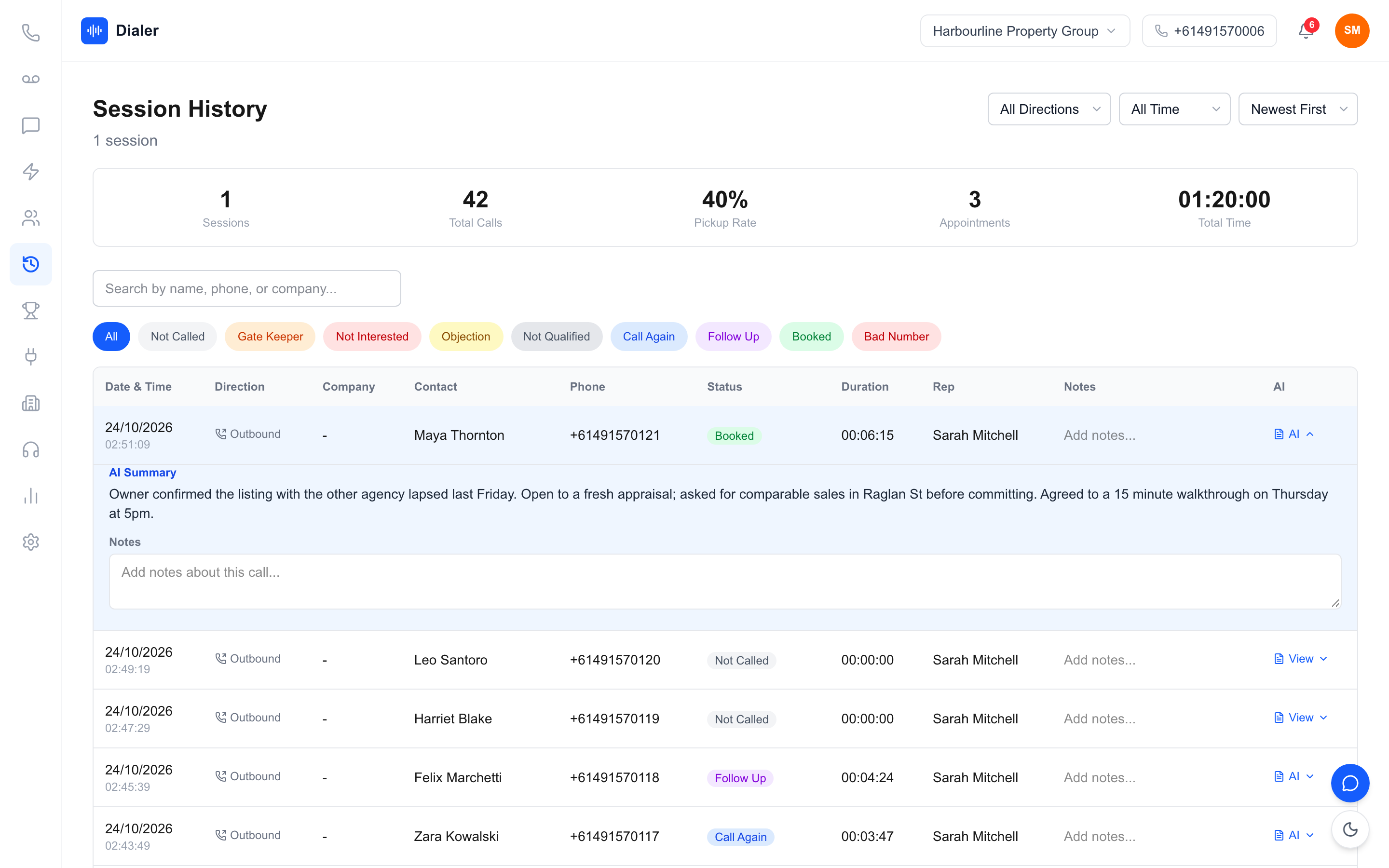
Every call should be recorded automatically. But recordings nobody listens to are just storage costs. This is where AI transcription and summaries earn their keep: each call is converted to text and summarised, so a manager can scan a day's worth of conversations in minutes, search for specific objections or competitor mentions, and spot which calls need a proper listen. Reps benefit too: no more frantic note-typing while the next lead dials.
An SMS inbox for every rep
Half of outbound follow-up now happens by text. Each rep needs their own SMS inbox tied to their dialling number, so follow-ups, reminders and "just tried you" messages come from a consistent number and stay in the dialler, not scattered across personal phones.
Live metrics and a leaderboard
Outbound calling is a morale game. Live session metrics (calls made, connects, talk time, outcomes as they happen) plus a visible team leaderboard keep energy up and make coaching conversations factual instead of vibes-based. When a rep is having a quiet day, you can see it at 10am, not in an end-of-week report.
A script panel that lives where reps work
Reps shouldn't be alt-tabbing to a Word doc mid-call. The current script, objection handlers and compliance lines should sit inside the dialling screen. Bonus points if the script syncs from a shared Google Doc, so when the manager updates the pitch, every rep sees the new version immediately.
Lead import that accepts the list you actually have
Lists arrive as CSVs, spreadsheets, PDFs from a data provider, or, in real estate especially, a photo of a printed list. Smart import that reads those formats and maps the fields saves the hidden hour of admin that kills dialling sessions before they start.
The Australia-specific requirements overseas software gets wrong
Do Not Call Register checking
Calling numbers on the Do Not Call Register is one of the fastest ways to attract ACMA attention. Your dialler workflow needs a practical way to check lists against the register and remove flagged numbers before they reach a rep. Be wary of any product, local or overseas, that claims this happens magically. What matters is that the checking tool exists in your workflow and your team actually runs it before a list goes live.
ACMA calling hours across four time zones
Telemarketing calls to Australian consumers are restricted to 9am–8pm Monday to Friday and 9am–5pm Saturday, in the recipient's local time. Australia makes this a daily operational puzzle. When it's 9am in Sydney and Melbourne, it's 8:30am in Adelaide: only half an hour behind, but enough to breach the rules if your team starts dialling South Australian numbers on Sydney time. Perth is two to three hours behind the east coast depending on daylight saving, which cuts both ways: your Sydney team can legally keep calling Perth prospects into their own evening, and can just as easily call a Perth household at what's still breakfast time for them if the software isn't thinking in recipient time. Your dialler setup and your team's discipline need to treat time zones as a first-class thing, not an afterthought.
Pricing clarity: per-team vs per-seat
US dialler pricing is usually quoted per seat, in US dollars, excluding tax. A "reasonable" per-seat price multiplied across a ten-person team, converted to Australian dollars, often lands far above the headline. Look for pricing quoted per organisation where possible, in Australian dollars, and check whether the advertised figure is the figure you'll actually pay each month. Also compare like with like on included minutes: a cheap seat with tiny call allowances can cost more than a dearer plan with minutes bundled. Our pricing page shows the per-organisation model so you can benchmark whatever else you're quoted.
Local industries, local patterns
Australian outbound is dominated by a few sectors (solar, real estate and insurance among them), each with its own calling patterns, scripts and compliance sensitivities. Software designed for US SDR teams selling SaaS often assumes workflows that don't translate. If you're in one of those sectors, look for a provider who actually builds for it, the way we've shaped Veyce for solar sales teams and similar outbound operations.
How Veyce is built around this
Veyce is a fully managed power dialer built specifically for Australian outbound sales teams. "Fully managed" is the operative phrase: instead of handing you software and a telco configuration project, Veyce provisions and manages a dedicated Australian number for your team, with no telco or Twilio account needed on your side. Reps can have their own number too, assigned on request.
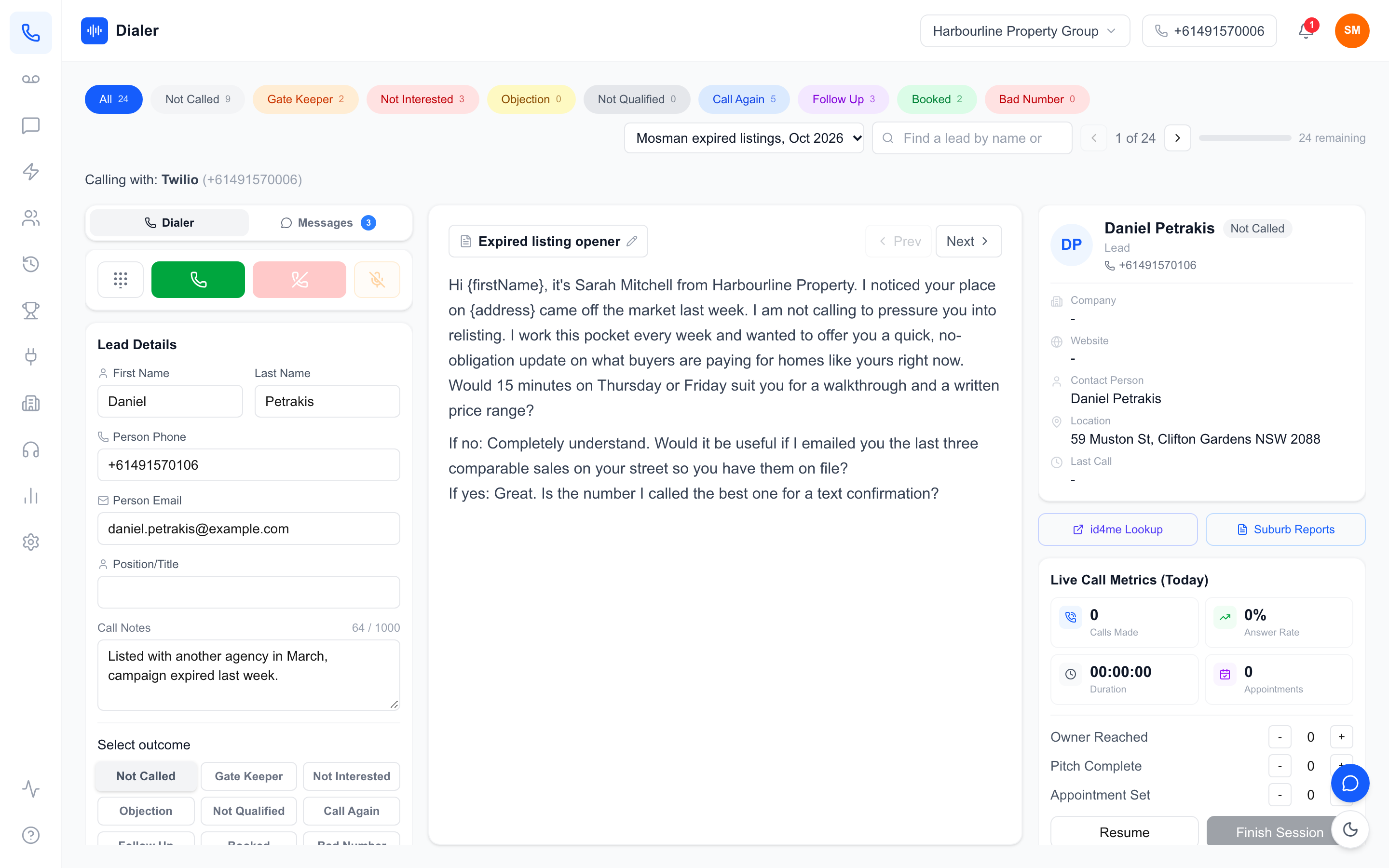
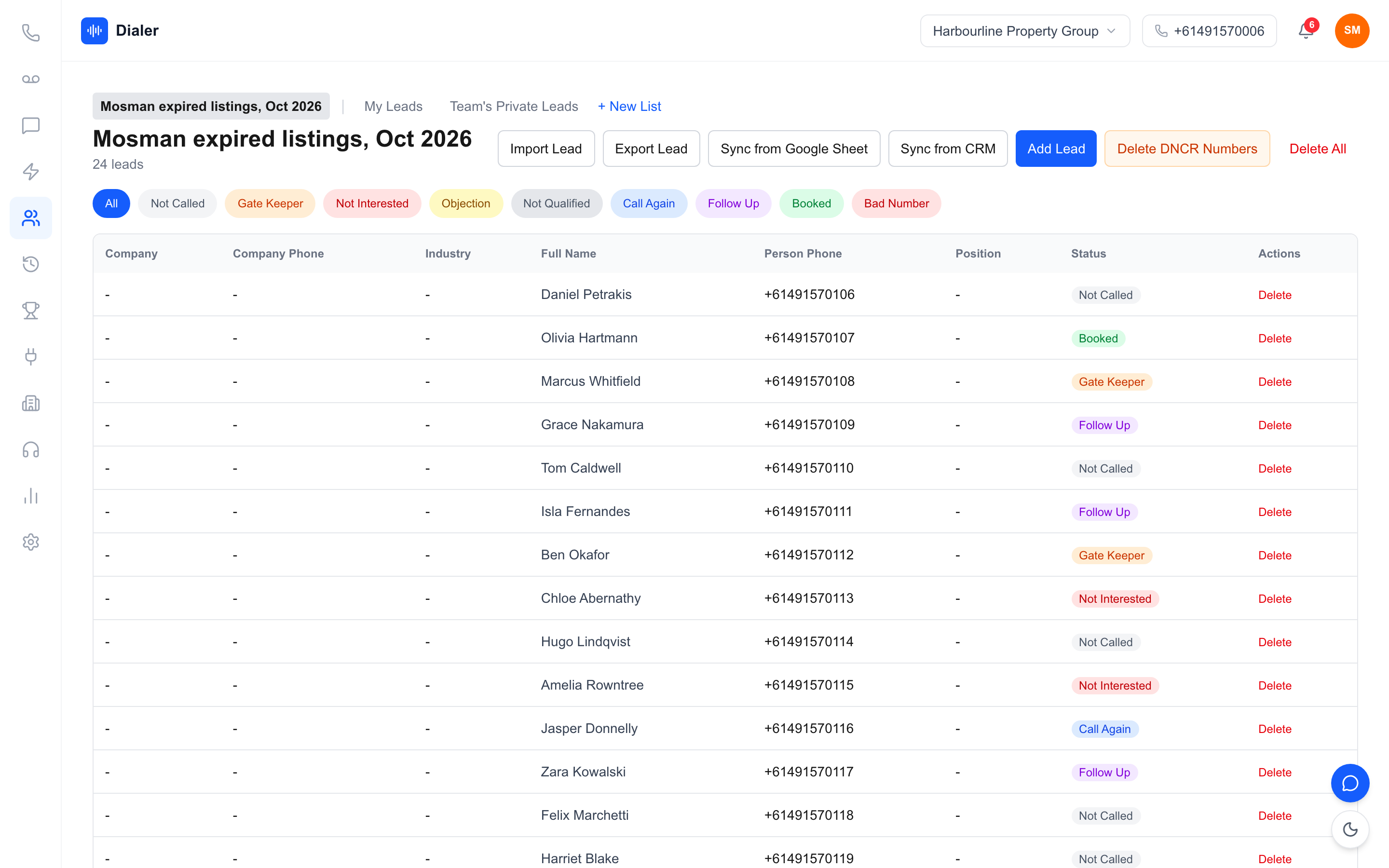
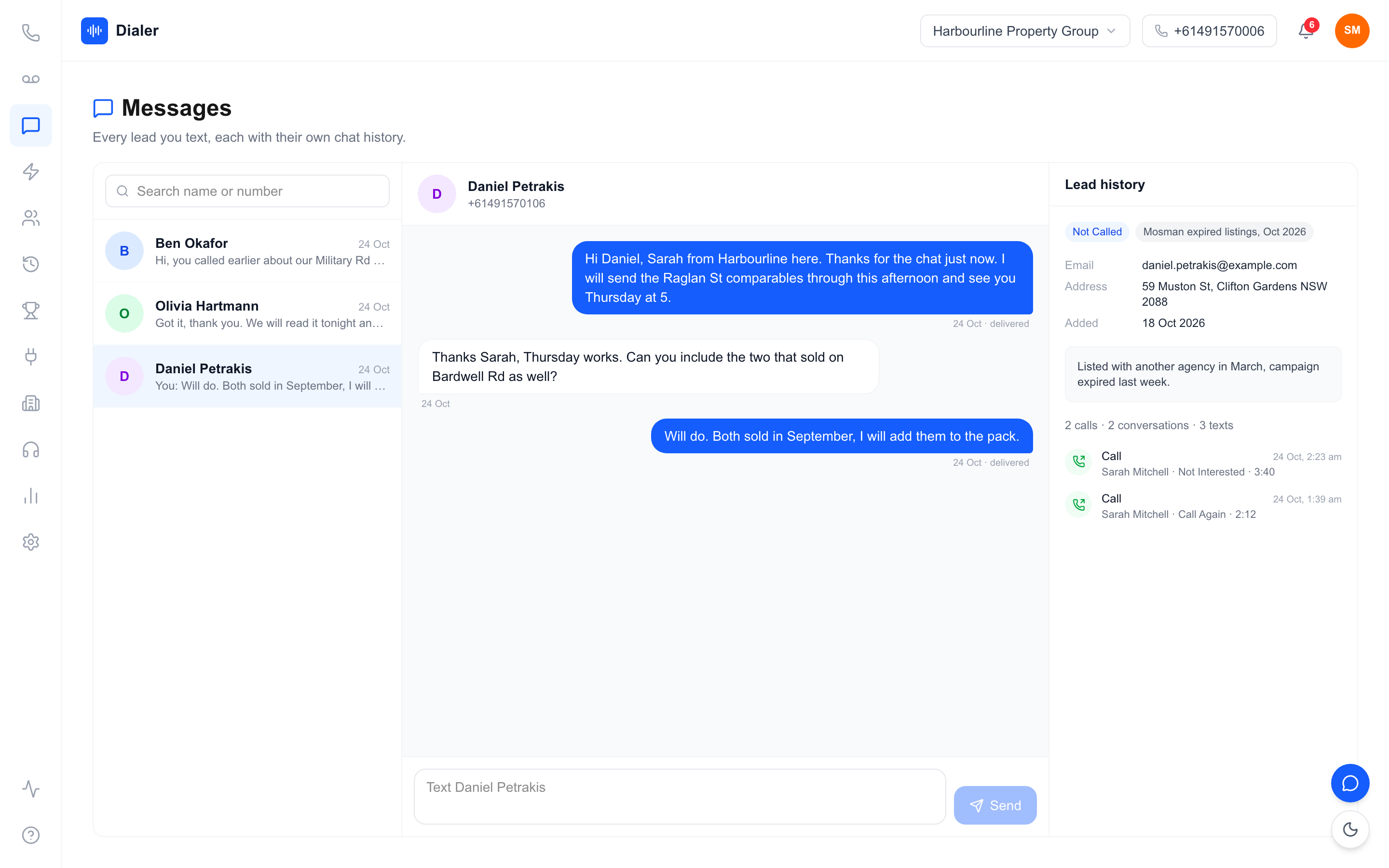
Inside the loop: smart lead import takes CSV, XLSX, DOCX, PDF and image files (yes, including a photo of a paper list) and turns them into structured, ready-to-call leads. In Power Dialler mode, reps dial one call at a time from your Veyce number, with the script panel in front of them. Every recorded call is transcribed and summarised by AI. Each rep has an SMS inbox for follow-ups. Managers get live session metrics and a team leaderboard, plus one-click removal of leads your Do Not Call Register wash has flagged, so registered numbers stay out of the dialler. Leads can also be imported straight from a Google Sheet.
Pricing is per organisation, not per seat: Solo at $49/month (1 seat, 100 minutes), Team at $179/month (4 seats), Growth at $449/month (10 seats) and Agency at $1,099/month (25 seats), with extra seats at $29 and $0 setup. Compare that structure with per-seat US pricing before you assume the overseas brand name is the cheaper option, and then compare the feature list against the one above.
For the full rundown of how a power dialler should work for Australian teams, see our guide to choosing a power dialer in Australia.
Try it on your own list
The fastest way to judge any dialler is to run your own leads through it for a week. Veyce offers a free 3-day trial on the Solo plan, counted from your first call, with 100 calling minutes and no credit card required: your number provisioned, your list imported, your first calls made. If the loop doesn't feel faster by day three, you've lost nothing but a few hours of manual dialling you would have spent anyway.
Frequently asked questions
What's the difference between a power dialler and a predictive dialler?
A power dialler calls one number at a time with the rep already on the line, so every answered call starts with a human hello. A predictive dialler dials multiple numbers at once and connects the first answer, which produces silent and abandoned calls, a real compliance and reputation risk in Australia.
Is it legal to use sales dialer software in Australia?
Yes, provided you follow the rules: call only during ACMA hours (9am–8pm weekdays, 9am–5pm Saturdays, recipient's local time), respect the Do Not Call Register, identify yourself and your business, and honour opt-outs immediately. The software helps with the workflow; the obligations are yours.
Why does the caller ID number matter so much?
Because prospects screen calls. A consistent, dedicated Australian number (ideally local or a recognisable +614 mobile) gets answered at materially better rates than overseas or withheld numbers, and when the prospect calls back, they reach the rep they spoke to.
How much should sales dialer software cost for a small Australian team?
It depends on the pricing model. Per-seat US products add up quickly once every rep is licensed and currency conversion applies. Per-organisation pricing keeps it predictable: Veyce's Team plan is $179/month for 4 seats, for example. Whatever you choose, check included minutes, number costs and setup fees before comparing headline prices.
Can I import leads from a PDF or a photo of a list?
With Veyce, yes: smart import reads CSV, XLSX, DOCX and PDF files and images, and maps them into structured lead records. With most overseas diallers, expect to convert everything to a clean CSV yourself first.