Solar lead calling software is only as good as the way your team treats each kind of lead. A homeowner who filled in a quote form ten minutes ago, a shared lead bought from a lead generator, and a quote that went cold last winter are three very different phone calls. Treat them the same and you waste the fresh ones and burn the old ones.
This guide breaks solar leads into the types most Australian retailers and installers actually work, then sets out how to call each one: how fast, how often, what to say and when to stop. It finishes with what to look for in software that keeps all of it organised. If you mainly cold call homeowners from property data rather than working enquiries, our post on running a solar sales team on a power dialler covers that side.
The four kinds of solar lead and why they need different calls
Before you choose solar lead calling software, sort your leads. Most teams have four groups.
Fresh web and form enquiries
These are homeowners who asked for a quote on your website, a landing page or a social media form. They expect a call, they remember asking, and they are often comparing two or three installers. The first call should be fast, friendly and focused on booking the assessment, not on selling the system.
Bought or shared leads
Lead generators sell solar enquiries, sometimes to several installers at once. Ask your supplier how the lead was generated, whether it is exclusive and what consent the homeowner gave. A shared lead is a race, so speed matters even more, and your opening needs to explain who you are because the homeowner may not recognise your company name.
Old quotes and aged leads
Every solar business has a pile of quotes that never closed: the homeowner was waiting on a bonus, a renovation or a better price. These leads already know you. A re-engagement call works best when it gives a genuine reason to talk again, such as a new battery option or a change in their circumstances you noted last time.
Referrals and past customers
Referrals convert well because a friend has vouched for you. Past customers are worth calling too, especially owners of older systems who may now want a battery or an upgrade. These calls are relationship calls, so rushing them on a fast dial cadence is a mistake.
How to call fresh enquiries and bought leads
Fresh leads lose value by the hour. Your process should get to them first and keep trying until they answer or say no.
Get to them while they remember asking
Set a target for first contact on new enquiries and track it. Many teams aim for the same business day, and faster where the lead is shared. The point is not a magic number of minutes; it is making sure a new enquiry never sits in a spreadsheet overnight while a competitor calls first.
Build an attempt cadence
Most homeowners will not answer the first call. A simple cadence helps. This is a worked example, not a rule: call on day one, try again later that day at a different time, text after the second missed call, then call on days two, four and seven, moving the time each attempt. After six or seven attempts with no answer, mark the lead as no contact and move it to a slower re-engagement list rather than deleting it.
Text when they miss you
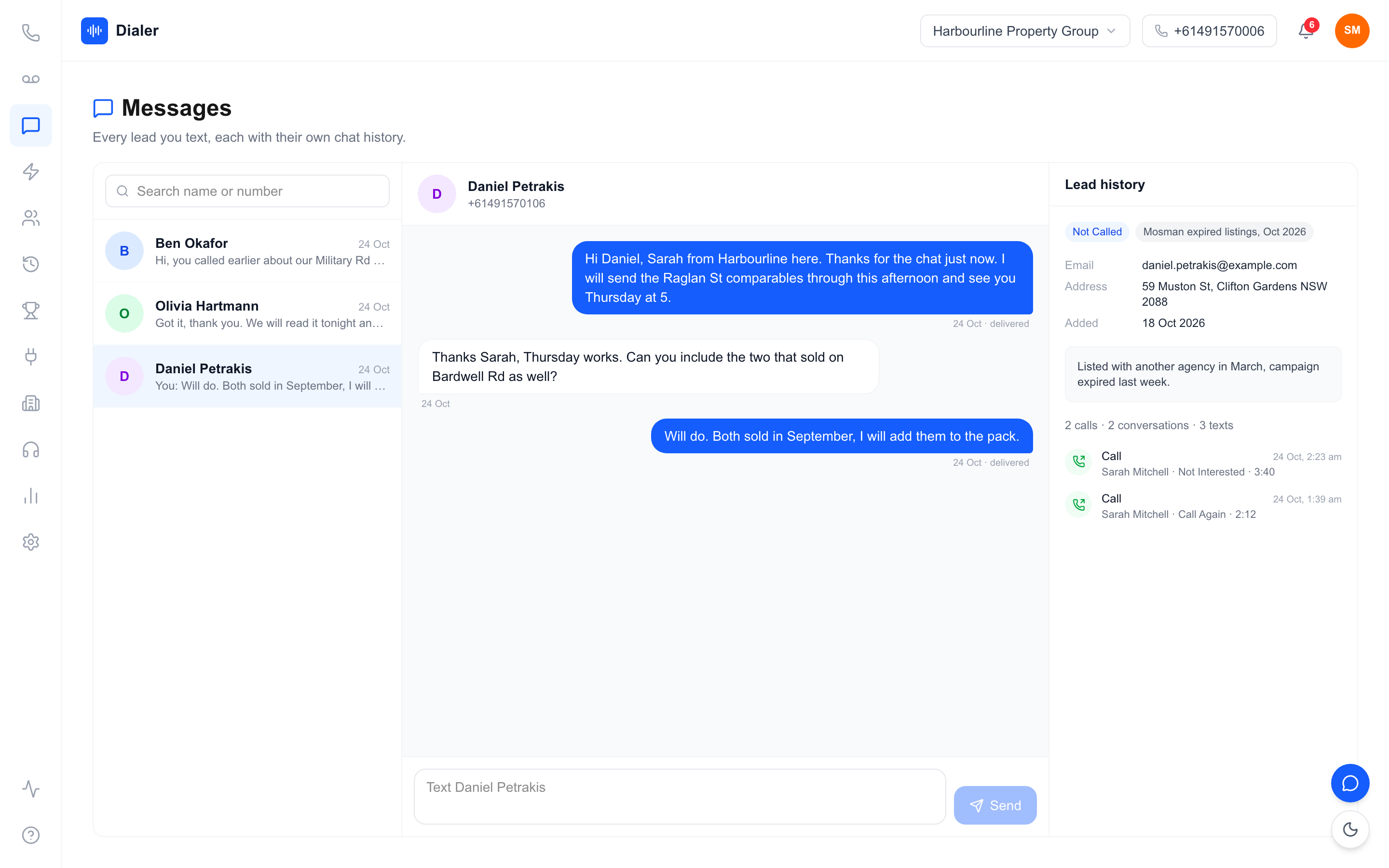
A missed call from an unknown number is easy to ignore. A short text from the same number, saying who you are and why you called, makes the next call far more likely to be answered. Keep it plain: your name, the company, the quote they asked for and a time you will try again.
Consent and the Do Not Call Register
A homeowner who asked you to call has usually given you consent to contact them about that enquiry, but keep a record of the form or source, and check how long that consent lasts in your situation. The register's page on receiving calls after registering explains when calls to a registered number can still be made. Anything without clear consent should be washed against the register before it is dialled. Our Do Not Call Register guide links to the official rules.
How to re-engage old quotes and nurture referrals
Older leads need a lighter touch and a better reason to call.
Give every re-engagement call a reason
"Just checking in" rarely works. Look at the notes from the original quote and find a real reason: they were waiting until after winter, they mentioned a pool pump or an electric vehicle, or a battery was out of budget at the time. Open with that reason, then ask whether things have changed.
Use outcomes to decide the next step
Outcomes are what make an aged list workable. If every call ends with a clear outcome such as call again, follow up, booked, not interested or bad number, you can build the next list from the outcomes rather than calling everyone again. "Not interested" leads should stop. "Call again" leads go into the next block. "Bad number" leads come out of the list for good.
Slow down for referrals and past customers
These calls are about trust. Give reps time to talk, keep the script light, and make sure any promise made on the call is followed up the same day. A summary of the call in the lead's history means whoever calls next knows what was said.
What solar lead calling software needs to do
With the process clear, the software requirements follow.
Bring leads in from where they live
Solar leads arrive from website forms, lead suppliers, spreadsheets and CRMs. Good solar lead calling software should import spreadsheets and other files without retyping, and sync with the tools you already use, so a new enquiry reaches the dialler quickly.
Keep lists by lead type
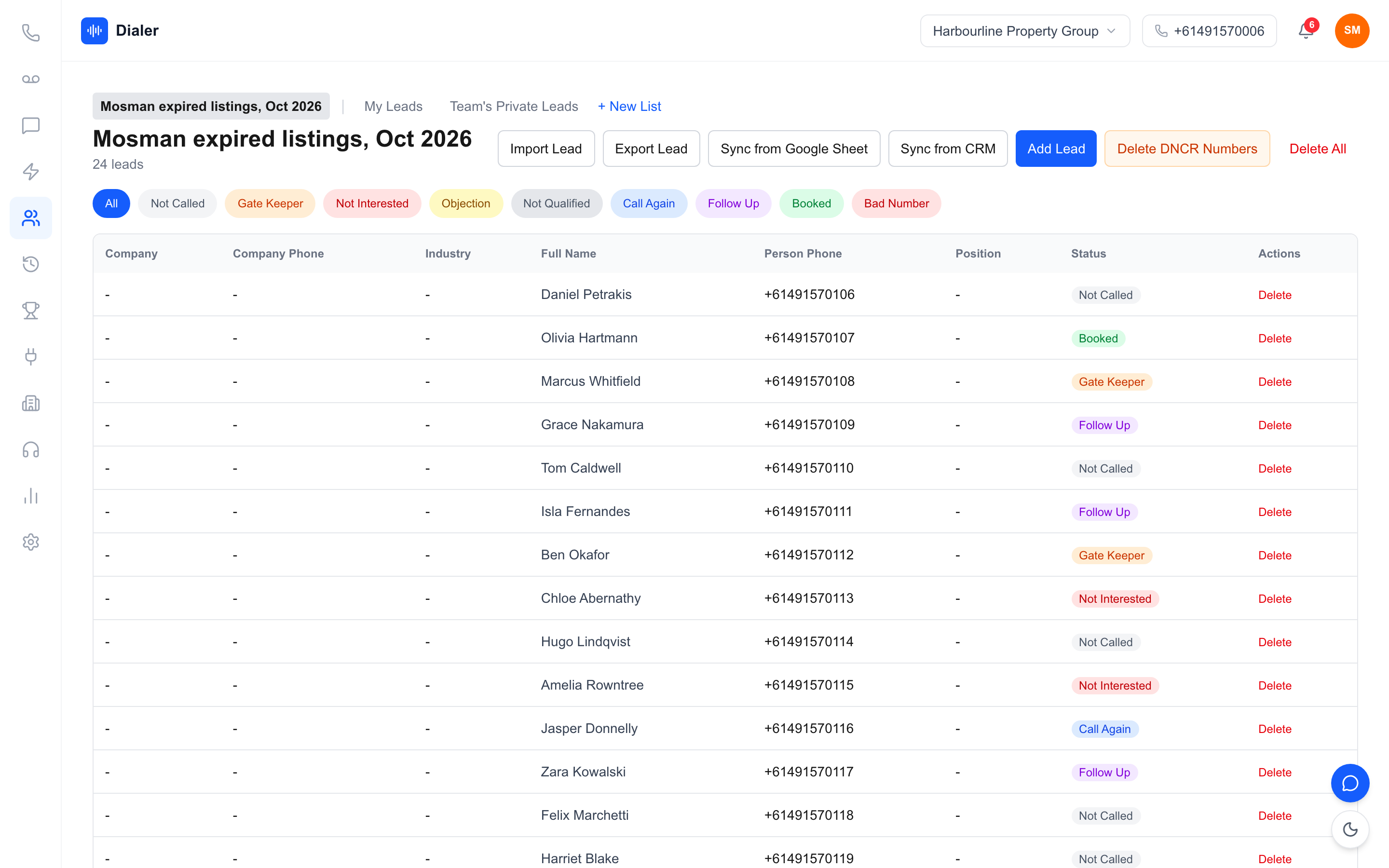
Separate lists for fresh enquiries, bought leads, aged quotes and referrals let you run different cadences and scripts for each. They also let you measure which source actually books assessments, which is the number that tells you where to spend your lead budget.
Log outcomes in one tap
If logging an outcome takes more than a second or two, reps skip it and your re-engagement lists fall apart. One-tap outcomes that match your process keep the data clean.
Show managers what is happening
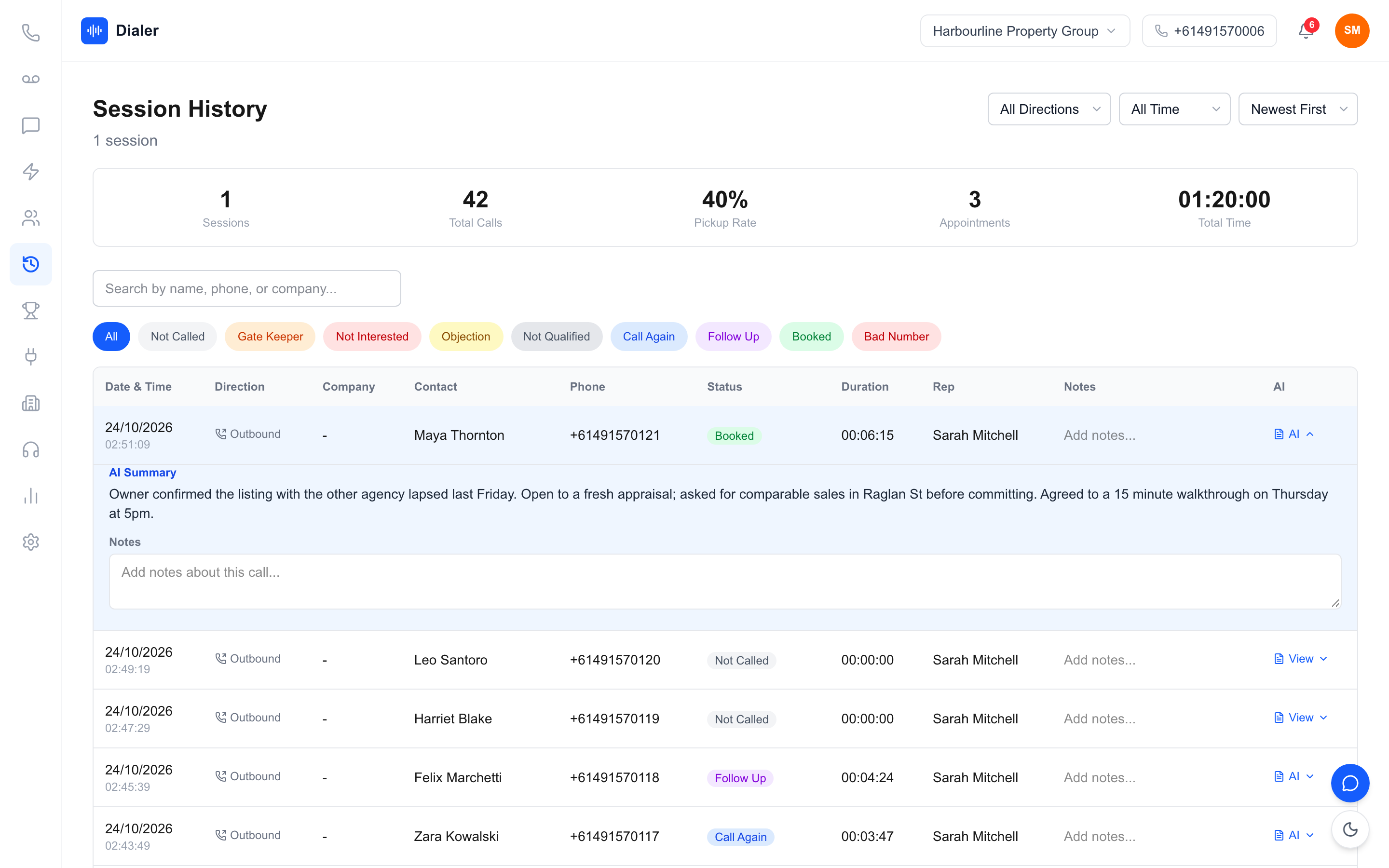
Managers need to see calls made, answer rate and bookings for each list during the day, not after the week is over. Summaries of recorded calls let them check the quality of fresh-lead calls, where the first impression matters most.
Veyce: solar lead calling software that keeps each list moving
Veyce is an Australian power dialler that suits teams working a mix of solar enquiries and older leads. The Veyce page for solar sales teams gives the overview.
Lead imports
Veyce imports leads from spreadsheets, PDFs and photos using OCR and rule-based mapping, and from Google Sheets. Each import can go into its own list, so fresh enquiries, bought leads and aged quotes stay separate. Veyce works with your wash: numbers the wash marks as registered are left out of PriceFinder imports, and the Delete DNCR Numbers button clears flagged leads.
Calls, texts and outcomes from one number
Your team gets one dedicated Australian number included, and Veyce assigns a rep their own Australian number on request. In Power Dialler mode, reps work one call at a time, log an outcome in one tap and the next lead loads. Outcome labels can be renamed to match your process. Texts go out from the same number, with replies in the SMS inbox.
Summaries and metrics
Recorded calls are transcribed and summarised after the call, so the next rep to pick up an old quote can read what was said. Live session metrics and a team leaderboard show how each list is going. Prices are public on the Veyce pricing page, starting with Solo at $49 a month for one seat and Team at $179 for four.
Match the call to the lead
Solar lead calling software pays off when it helps your team treat each lead the way it deserves: fresh enquiries fast and persistently, bought leads with a clear introduction, old quotes with a real reason to talk, and referrals with care. Sort your leads into lists, set a cadence for each, log every outcome and let the outcomes build your next list.
To try that workflow with your own leads, start a free trial of Veyce: 3 days from your first call and 100 calling minutes, no card required, with your Australian number included.
Frequently asked questions
What is solar lead calling software?
It is software that helps solar retailers and installers call the leads they already have, such as quote enquiries, bought leads, old quotes and referrals. It usually includes a power dialler, lead lists, outcome logging, texting from the same number and reporting for managers. The useful difference from a basic phone app is that it keeps each type of lead in its own list with its own cadence, so nothing is forgotten or called too often.
How quickly should a solar team call a new enquiry?
As soon as practical, and at least the same business day. Homeowners who request a quote are often comparing several installers, and a shared lead may go to other companies at the same time. Rather than chasing a specific number of minutes, track how long new enquiries wait for a first call and keep shortening it. Text after a missed call so the homeowner knows who is trying to reach them.
How many times should we call a solar lead before giving up?
There is no single right number, but six or seven attempts spread over about a week, at different times of day, is a common working cadence. Add a text after the second missed call. If there is still no answer, mark the lead as no contact and move it to a slower re-engagement list rather than deleting it, because some homeowners come back months later.
Do I need to wash solar enquiries against the Do Not Call Register?
A homeowner who asked you to call has usually consented to contact about that enquiry, but keep a record of where the consent came from and check how long you can rely on it. Leads without clear consent, including many bought lists, should be washed before dialling. The register's website explains when calls to registered numbers can still be made. Veyce works with your wash; it does not wash numbers itself.
Can Veyce keep different solar lead types in separate lists?
Yes. Each import can go into its own lead list, so you can keep fresh enquiries, bought leads, aged quotes and referrals apart, run them in different calling blocks and compare results. Leads come in from spreadsheets, PDFs and photos, or through a Google Sheets import. You can try it free for 3 days from your first call, with 100 calling minutes and no card.