A solar prospecting dialler is the tool, but the list is the job. Cold prospecting for solar means calling homeowners who never asked to hear from you, and the quality of that list decides almost everything: who answers, who owns their roof, who is even allowed to be called. Teams that build lists carefully, suburb by suburb, and work them with discipline get more appointments from fewer numbers.
This guide covers the prospecting side of solar sales in Australia: choosing suburbs, sourcing and washing numbers, organising lists, opening a cold call, and deciding when a number has had enough. It is deliberately different from following up enquiries, which need a faster and more persistent rhythm. If you want the broader case for a dialler on a solar floor, see the power dialler for solar sales teams.
Choosing where your solar prospecting dialler should point
The best calling session starts weeks earlier, when someone decides which suburbs to call.
Owner-occupiers in houses
Solar is usually sold to people who own the house they live in. Renters and apartment owners are rarely able to say yes on the call. The Australian Bureau of Statistics publishes suburb-level census data, including home ownership and dwelling type, on its free QuickStats tool. A few minutes there will tell you which suburbs are mostly owner-occupied detached houses.
Suburbs your installers can actually serve
There is no point booking assessments two hours from your nearest installer. Draw your service area first, then pick suburbs inside it. If you have more than one crew, give each suburb a home crew so appointments land where someone can attend.
Signs a suburb is ready
Some suburbs already have panels on most roofs and others have almost none. Both can be worth calling, for different reasons: low-uptake suburbs are fresh ground for first systems, while high-uptake suburbs may be ready for batteries or upgrades of older systems. Decide which offer you are making before you build the list, because it changes the script.
Building and washing the list
A solar prospecting dialler cannot fix a bad list. These steps keep it clean before a single number is called.
Source numbers from a reputable provider
Property data providers such as PriceFinder offer phone searches by area that return owner names, addresses and phone numbers. Ask any provider where its numbers come from, how current they are and whether it marks numbers on the Do Not Call Register. Avoid lists with no clear source.
Wash before you dial, and again after 30 days
Cold prospecting calls to residential numbers generally need the list washed against the Do Not Call Register first. The register explains the process on its washing process overview, and its industry FAQs say a wash is relied on for 30 days. Record the wash date on every list, and re-wash any list you are still working after that.
One list per suburb
Import each suburb as its own list. It lets you run a suburb in one calling block, compare suburbs fairly, and retire a suburb cleanly when it is worked out. Label lists with the suburb, the offer and the wash date so anyone on the team knows what they are calling.
Worked example: sizing a suburb list
This is a worked example with assumptions, not a benchmark. Say a phone search for one suburb returns 1,200 owner records, and after the wash and removing flagged and blank numbers you have 800 callable numbers. If your own past sessions show roughly one conversation for every five dials and one booked assessment for every 25 conversations, then a first pass of 800 dials would produce about 160 conversations and six or seven assessments. Swap in your team's real ratios before you plan staffing, because they vary widely by offer, season and suburb.
Working a cold list without burning it
The fastest way to waste a good suburb is to call every number ten times in a week. Prospecting needs rules.
Open with permission, not a pitch
Cold calls are interruptions, so earn the next 30 seconds. Say who you are and where you are calling from, give one reason that matters to that suburb, and ask a short question that is easy to answer. Our cold calling tips for Australian sales teams go deeper on openers that do not sound scripted.
Cap attempts on cold numbers
Cold numbers deserve fewer attempts than enquiries. A working rule many teams use is two or three attempts at different times of day across a fortnight, then rest the number. Calling a stranger six times in a week turns a possible yes into a complaint.
Log every outcome, every time
Outcomes are what let you rework a suburb later. Not interested, already has solar, renting, bad number, call again and booked each lead to a different next step. If reps skip outcomes, your second pass calls the same people who said no last month.
Retire, rest and revisit
When a suburb list has had its attempts, retire it. Bad numbers come out for good, "not interested" stays out, and the rest can rest for a few months. When you come back, re-wash the list first, start with the "call again" group and use a different offer if you can.
What to look for in a solar prospecting dialler
Prospecting puts specific demands on a dialler. Check these before you choose one.
Imports that handle property data
Property exports often split names into surname and initials and addresses across several columns, and some mark registered numbers in the phone column instead of giving a number. Your dialler should handle that shape without manual clean-up.
Calling hours and parallel dialling
Large cold lists are where parallel dialling, which rings several numbers at once, is most tempting. If you use it, it must respect calling hours. The register's industry standards page lists telemarketing hours as weekdays 9am to 8pm and Saturdays 9am to 5pm, with no calls on Sundays or national public holidays.
Clean outcomes and per-list reporting
You need answer rate, conversations and bookings per list, so you can see which suburbs are worth a second pass and which are not.
Veyce: a solar prospecting dialler that reads property data
Veyce is an Australian power dialler, and its import tools were built for exactly this kind of list. See the overview on the Veyce page for solar sales teams.
PriceFinder exports in one step
Veyce recognises a PriceFinder Phones Search export. It joins the street number, street, locality and postcode into one address, maps surname and initials to the lead's name, and keeps the phone type, wash date and load date in the lead's notes. Veyce works with your wash: numbers the wash marks as registered are left out of PriceFinder imports, and the Delete DNCR Numbers button clears flagged leads. Other lists import from spreadsheets, PDFs and photos using OCR and rule-based mapping.
Power Dialler mode and the Parallel Dialer add-on
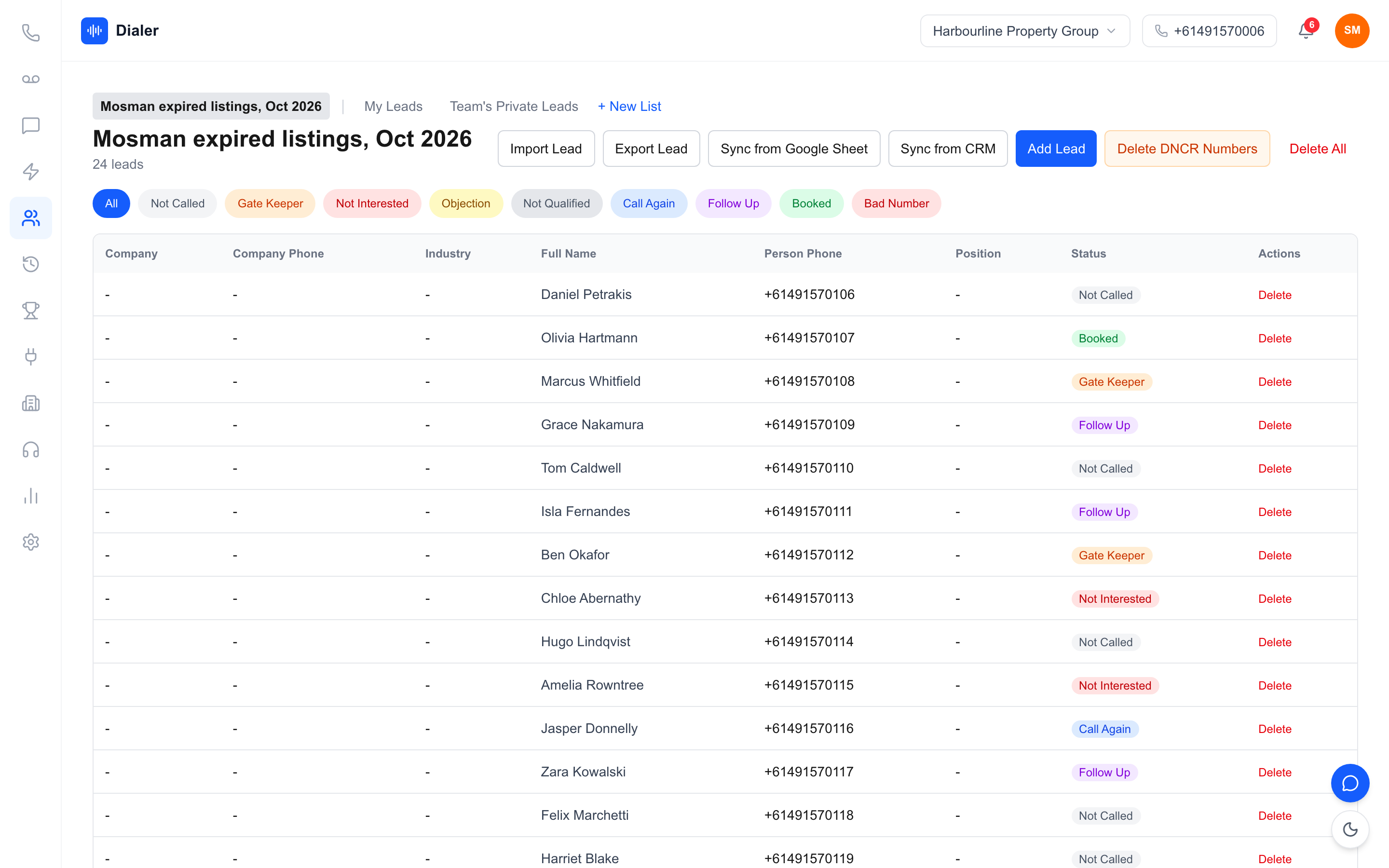
In Power Dialler mode, reps work one call at a time: the next lead loads as soon as they log an outcome. For bigger cold lists, the Parallel Dialer add-on (+$99 a seat on Growth, up to 5 leads at once, and Agency, up to 10) only places calls weekdays 9am–8pm and Saturdays 9am–5pm, in the lead's local time, with no Sundays or national public holidays.
Outcomes, metrics and one number
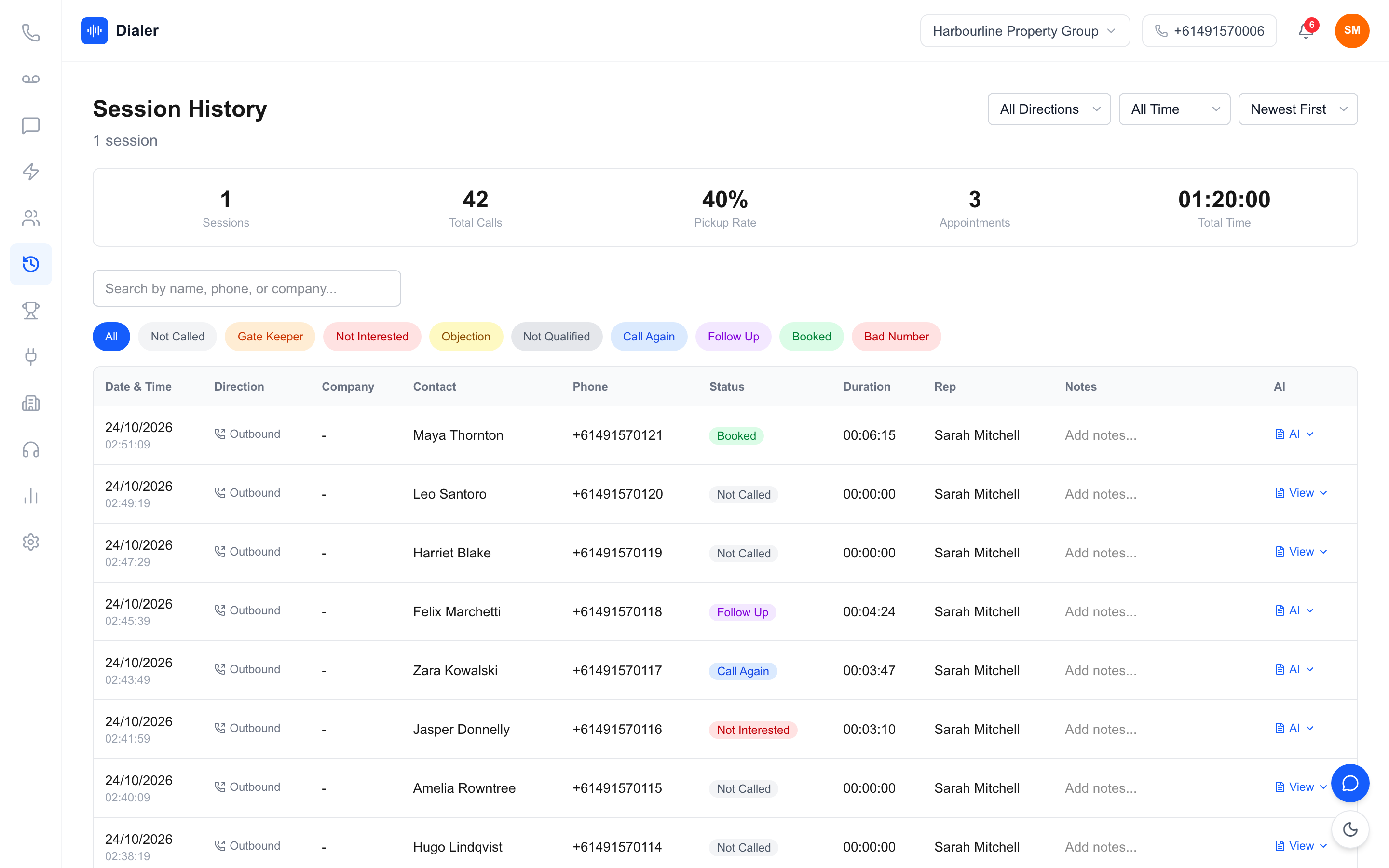
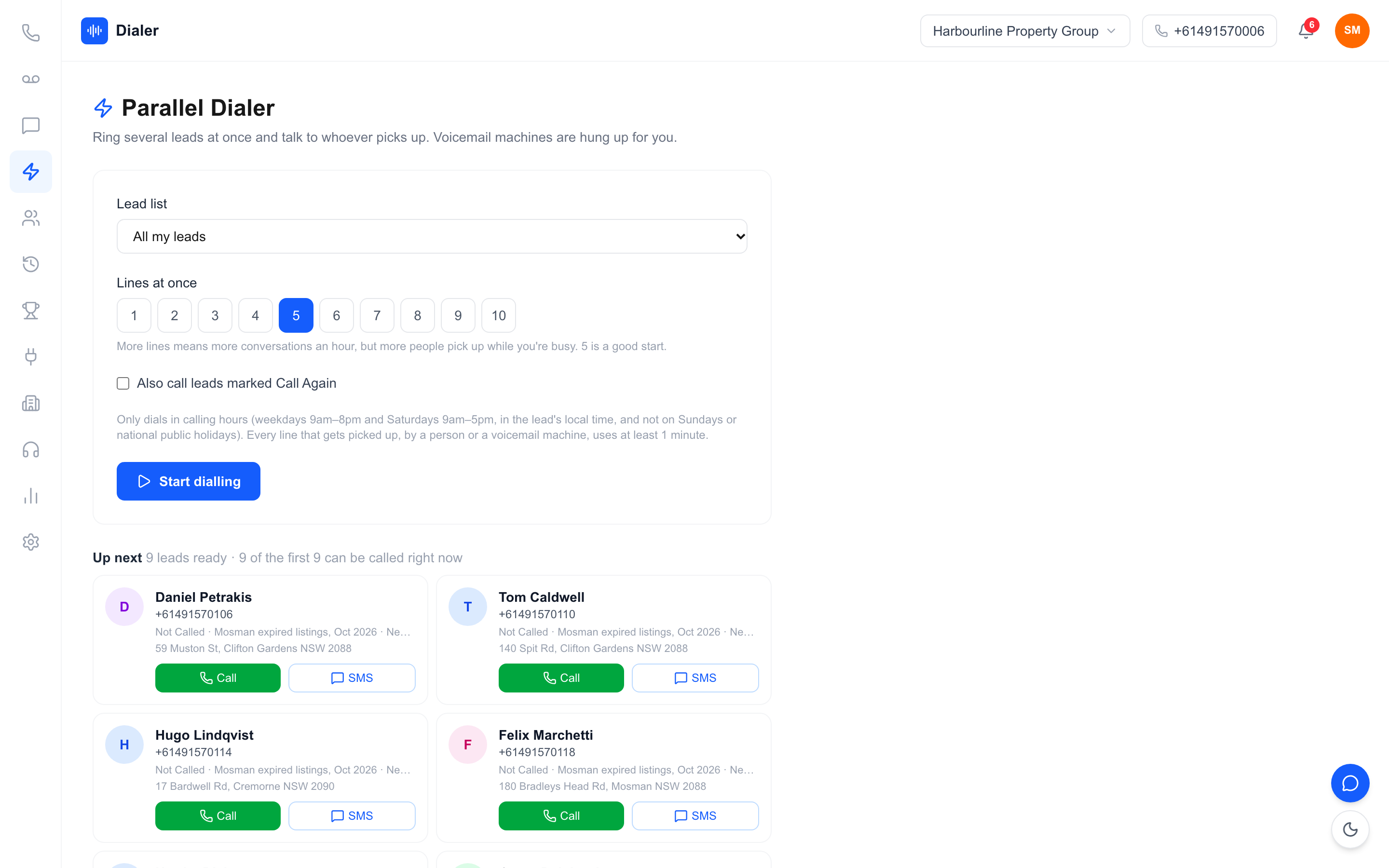
One-tap outcomes, live session metrics and session history show how each suburb is performing. Your team gets one dedicated Australian number included, and Veyce assigns a rep their own Australian number on request, so callbacks and texts come from a number the homeowner has already seen. Plans and seat prices are listed on the Veyce pricing page.
Prospect like the list is precious
It is. A solar prospecting dialler multiplies whatever you feed it, so feed it well: choose owner-occupied suburbs you can service, source numbers you can trust, wash and date every list, keep one list per suburb, cap attempts, log every outcome and rest lists before you revisit them.
To try that on a real suburb, start a free trial of Veyce: 3 days from your first call and 100 calling minutes, no card required, with your Australian number included.
Frequently asked questions
What is a solar prospecting dialler?
It is a dialler used to cold call homeowners who have not enquired, usually from property data, to book solar or battery assessments. A power dialler loads the next number when the rep is ready, which removes the manual dialling between calls. For prospecting, the most useful extras are imports that understand property data exports, one list per suburb, one-tap outcomes and reporting by list, so you can see which suburbs deserve a second pass.
Where do solar teams get numbers for cold prospecting?
Many use property data providers such as PriceFinder, which offer phone searches by area returning owner names, addresses and numbers. Whatever the source, ask where the numbers come from, how current they are and whether registered numbers are marked. Wash the list against the Do Not Call Register before dialling, record the wash date and re-wash after 30 days if you are still working it.
How many times should a cold solar prospect be called?
Fewer times than an enquiry. A common working rule is two or three attempts at different times of day across a fortnight, then rest the number for a few months. Cold prospects did not ask to hear from you, so heavy repetition produces complaints rather than bookings. Log every outcome so that people who said no or are renting are not called again on the next pass.
How does Veyce handle a PriceFinder phone search export?
Veyce recognises the PriceFinder Phones Search layout. It joins street number, street, locality and postcode into one address, maps surname and initials to the lead's name, and keeps phone type, wash date and load date in the notes. Numbers the wash marks as registered are left out of the import, and the Delete DNCR Numbers button clears any flagged leads that remain in a list.
Should solar prospecting use a parallel dialler?
It can help on large cold lists where most calls go unanswered, but it must stay inside telemarketing calling hours, and reps need to be ready for the call that connects. Veyce's Parallel Dialer add-on, on Growth and Agency plans at $99 a seat, only calls weekdays 9am–8pm and Saturdays 9am–5pm in the lead's local time, with no Sundays or national public holidays.