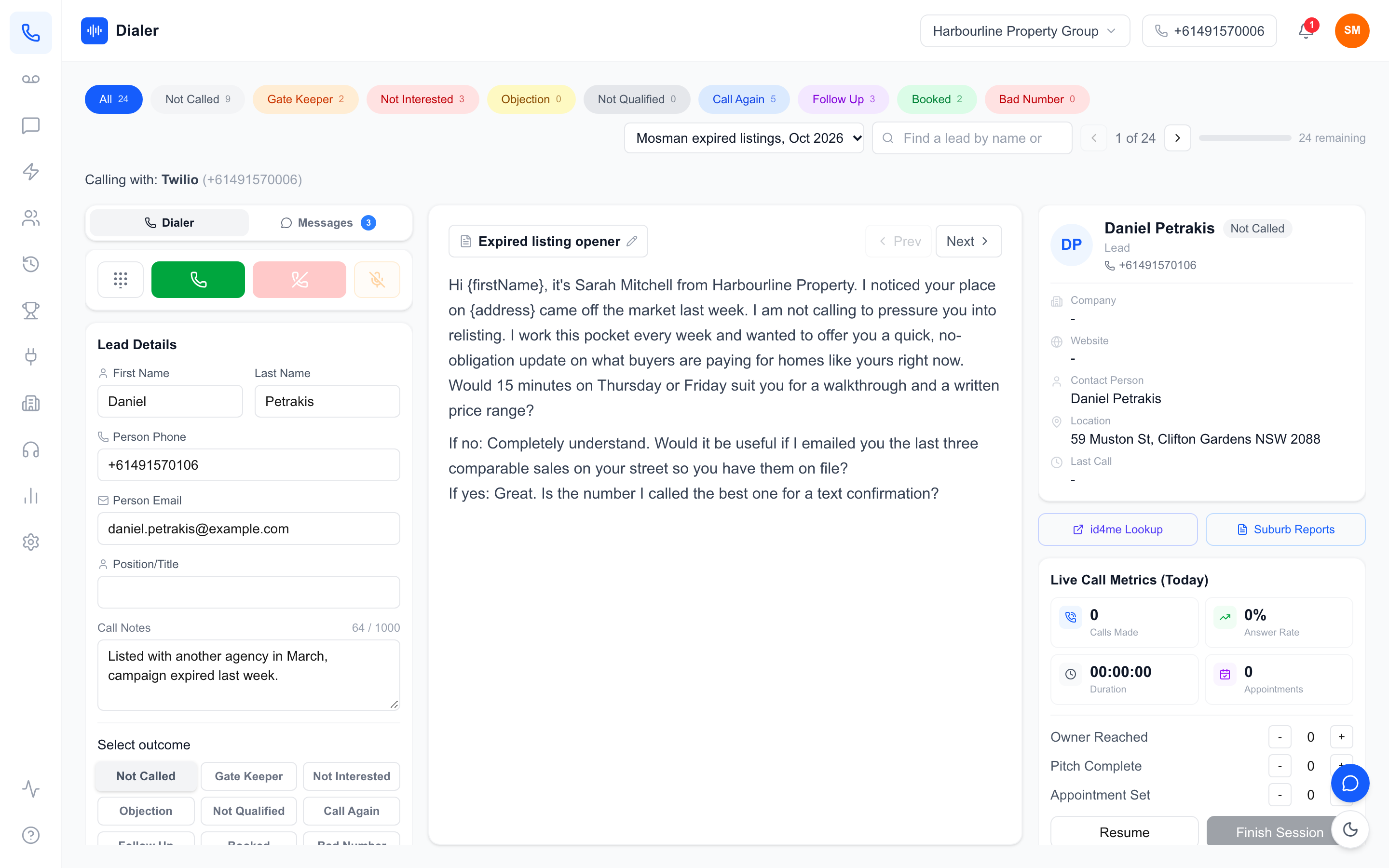
Suburb reports for real estate agents are usually treated as listing-presentation material: printed, bound and handed over at the kitchen table. Their bigger value comes earlier, on the phone. A homeowner who hears a specific, current fact about their own street is far more likely to keep talking than one who hears a generic "the market is strong" line, and the agent who has that fact on screen at the right moment books more appraisals.
This guide covers what a useful suburb report contains, where agents get them, how to use one during a prospecting call without turning the call into a phone appraisal, and how to keep reports current across an agency. It sits alongside our guide to the power dialler for real estate agents in Australia, which covers the calling side; this one is about the data you bring to the call.
What suburb reports for real estate agents should include
A suburb report is only useful on a call if an agent can find the right fact in a few seconds. Content and layout both matter.
Recent sales close to the homeowner
The most persuasive fact on a prospecting call is a recent sale nearby: the street, the type of home and what it sold for. Homeowners compare themselves with neighbours, not with suburb averages. A good report lists recent sales clearly enough that an agent can find "three doors down" or "same street" while the homeowner is still talking.
Suburb-level trends
Median prices, time on market, the number of homes sold and the number currently listed give context. They help an agent answer "is now a good time?" with something specific. Keep these figures to a handful; a report packed with charts is hard to use mid-call.
Who lives there
For some conversations, the shape of the suburb matters too: how many homes are owner-occupied, the mix of houses and units, and typical household types. The Australian Bureau of Statistics publishes this for every suburb on its free Census QuickStats tool, which is a useful supplement to sales data.
The date, on the front
Every report should show when it was produced. Sales data ages quickly, and quoting a sale from last year as "recent" costs trust the moment the homeowner checks.
Where agents get suburb reports
Most agencies source suburb reports for real estate agents from a mix of places. Choose based on what you will actually use on the phone.
Property data providers
Subscription providers such as PriceFinder produce suburb and sales reports as PDFs, along with phone searches for prospecting. Most agencies already pay for at least one provider, so the first step is often simply using the reports you have access to more consistently.
Your own agency records
Your own sales, appraisals and campaign results are often the most persuasive data you have, because you can speak to them first-hand. A one-page summary of your agency's recent results in a suburb works well beside a provider's report.
Public sources
Census data, local council information and state land and valuation records can add useful context. Use them to round out a report rather than as the main source of sales figures.
Using a suburb report on a prospecting call
Having suburb reports for real estate agents open on screen is half of it. The other half is using them without sounding like you are reading.
Open with one street-level fact
Lead with a single, specific fact rather than a speech: a recent sale nearby, or how quickly homes in the street have sold this year. Then ask a question. "A home on your street sold last month. Have you noticed more activity around you lately?" invites a conversation in a way a list of medians does not. Our cold calling tips for Australian sales teams cover openers in more depth.
Do not appraise on the phone
When a homeowner asks "so what's mine worth?", the report is a reason to meet, not a substitute for an appraisal. Share what nearby homes sold for, explain that condition and features make a real difference, and offer a short visit to give a proper range. Price guidance rules differ between states, so stick to what your agency's compliance training allows.
Offer to send the comparables
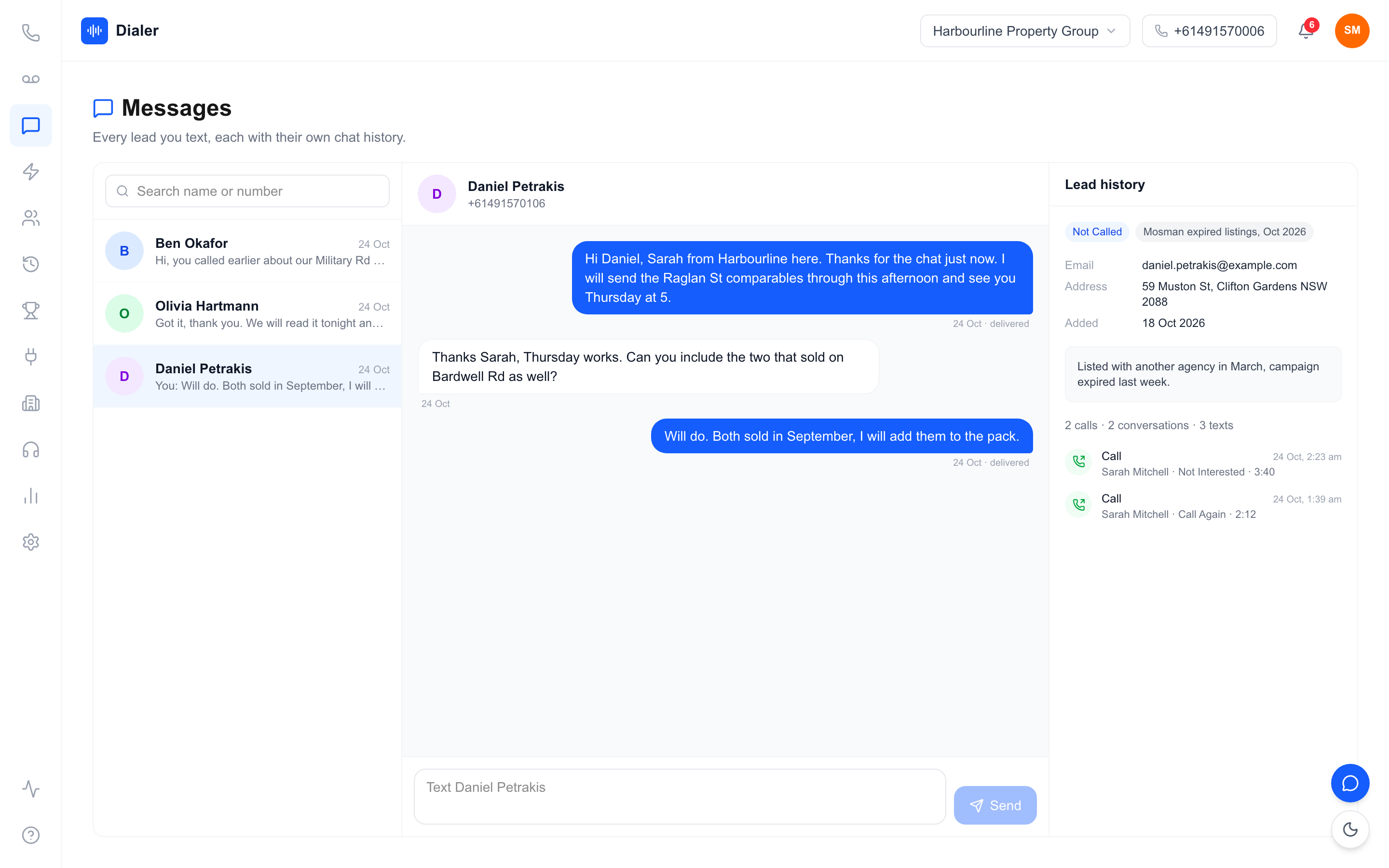
One of the easiest yes answers on a prospecting call is "would it help if I sent you the recent sales on your street?" It gives the homeowner something useful, confirms the best number to text, and creates a reason to follow up. Send it the same day while the call is fresh.
Match the report to the call type
Just-listed and just-sold calls work best with the specific property front and centre. Expired listing calls need recent sales that show what buyers are paying now. Database calls to past clients can lean on suburb trends, because the relationship already exists.
Keeping suburb reports current across an agency
Out-of-date suburb reports for real estate agents are worse than none. Build a simple routine.
Refresh on a schedule
Most agencies refresh their core suburb reports monthly, and more often in a fast-moving market. Put a recurring date in the calendar and give one person, often a PA or the principal, the job of uploading the new reports.
Name and file them consistently
Use one naming pattern for every report, such as suburb name plus month and year. When an agent is on a call, they should be able to pick the right report from a list in a second, not open three files to find it.
Remove old versions
Delete or archive last month's report when the new one goes up, so nobody quotes stale figures by accident.
Pair each report with a calling list
Run one prospecting list per suburb and keep a matching report for each. Wash each list against the Do Not Call Register before calling, as the register explains in its washing process overview, and keep the report and list on the same refresh cycle where you can.
Veyce: suburb reports beside every call
Veyce is an Australian power dialler that puts suburb reports for real estate agents inside the dialler, so agents do not have to leave the call to find their data. The Veyce page for real estate agencies has the overview.
Upload once for the whole agency
On the Integrations page, under Real Estate Data, a principal or admin uploads suburb reports from PriceFinder as PDFs, each with a label, suburb and postcode. A label such as "Elizabeth Downs Jun 25" keeps the month visible. Every agent in the agency then sees the same reports, and an out-of-date report can be deleted in one click.
Open them from the dialler mid-call
In the dialler, a Suburb Reports button sits beside the lead's details, with a count of how many reports are uploaded. Clicking it opens a full-screen viewer: the list of reports on the left, labelled by suburb and postcode, and the selected PDF on the right. Agents can switch between suburbs without leaving the dialler.
PriceFinder imports for the calling list
Veyce also recognises a PriceFinder Phones Search export. It joins street number, street, locality and postcode into one address, maps surname and initials to the lead's name, and keeps the phone type and wash date in the notes. Veyce works with your wash: numbers the wash marks as registered are left out of PriceFinder imports, and the Delete DNCR Numbers button clears flagged leads.
The rest of the call
Your team gets one dedicated Australian number included, and Veyce assigns a rep their own Australian number on request. In Power Dialler mode, agents work one call at a time with the script beside the lead. Texts go out from the same number, and recorded calls are summarised after the call. Prices are public on the Veyce pricing page.
Bring the street to the call
Suburb reports for real estate agents earn their keep on the phone. Keep them short, dated and specific; lead with one street-level fact; use the report as a reason to meet rather than a phone appraisal; offer to send the comparables; and refresh every report on a schedule.
To try suburb reports inside the dialler with your own PriceFinder files, start a free trial of Veyce: 3 days counted from your first call and 100 calling minutes, no card required, with your Australian number included.
Frequently asked questions
What is a suburb report for real estate agents?
It is a short summary of a suburb's property market, usually a PDF, covering recent sales, median prices, time on market and listing activity, sometimes with demographic information. Agents use suburb reports in listing presentations and, more and more, on prospecting calls, where a specific recent sale near the homeowner is a strong reason for them to keep talking and agree to an appraisal visit.
Where can agents get suburb reports in Australia?
Most agencies get them from a property data subscription such as PriceFinder, which produces suburb and sales reports as PDFs. Many agencies add a one-page summary of their own recent results in the suburb. Public sources such as the ABS Census QuickStats tool add context on owner-occupation and household types, but sales figures usually come from a data provider.
How often should suburb reports be updated?
Monthly is a sensible default for most agencies, with more frequent updates in a fast-moving market. The important part is consistency: one person owns the refresh, every report is labelled with its month, and the old version is removed when the new one goes up. Quoting an old sale as recent damages trust quickly, especially with homeowners who follow sales in their street closely.
Can agents open suburb reports during a call in Veyce?
Yes. After a principal or admin uploads PriceFinder PDF reports on the Integrations page, with a label, suburb and postcode, every agent in the agency can open them from the Suburb Reports button in the dialler. A full-screen viewer shows the list of reports on the left and the selected PDF on the right, so agents can find the right suburb without leaving the call.
Should agents give price estimates using a suburb report on the phone?
Generally no. Use the report to share what nearby homes have sold for, explain that condition and features change the value, and offer a short visit to give a proper range. Price guidance rules vary between states, so follow your agency's compliance training. Offering to text the comparable sales is often an easier yes than pushing for an appraisal on the first call.