Call disposition codes for sales teams are the short labels a rep picks at the end of every call: booked, call again, not interested, bad number. Each one takes two seconds to record, and together they decide almost everything that happens next, from who gets called tomorrow to which list is quietly retired.
Most teams get them wrong in one of two ways. Either there are thirty codes and reps pick the first one that looks close, or there are three and nobody can tell a gatekeeper from a hang-up. This guide gives you a short, practical list, the rules that keep it honest, and a weekly routine for turning the results into better lists and better calls.
What call disposition codes are and why they matter
A code is a decision, not a note
A note describes a call. A disposition code decides what the business does about it. "Spoke to Dave, seemed keen, busy until the end of the month" is a note. "Call Again" with a date is a decision that a system can act on without anyone reading a word. Good codes are the ones a manager, a report and a dialler can all use without interpretation.
What breaks when codes are vague
Vague codes do damage quietly. Leads that should be retired stay in the queue and get rung a fourth and fifth time. Real opportunities sit under "no answer" because the rep reached a receptionist and had nowhere better to put it. Managers lose the ability to tell a bad list from a bad pitch, because both show up as a pile of "not interested". People who asked not to be called again are rung again, which is the mistake that costs the most.
Codes, notes and lead status
Three things get confused. The disposition is the result of one call. The note is the detail a person needs before the next call. The lead status is where the lead sits overall, and it usually follows the most recent disposition. Keep the three separate and each stays short. When a rep tries to cram detail into the code, the list of codes grows; when they skip the code and write a note, the reports go blind.
Building a list of call disposition codes for sales teams
Start with what happens next
The test for every code is simple: does it lead to a different next action from every other code on the list? If two codes lead to the same action, merge them. If one code leads to two different actions, split it. This is why "no answer" and "bad number" must be separate (one is retried, the other is removed) and why five flavours of "not interested" rarely earn their place.
A starter list of nine codes
Nine codes cover most outbound teams. Rename them to suit your industry, but keep the next action attached to each one.
- Not called: the lead is still in the queue. Next action: dial.
- Gatekeeper: you reached a receptionist or a family member, not the decision maker. Next action: retry at a different time, and note the name you were given.
- Call again: no answer, voicemail, or "ring me back later". Next action: retry, with a date if the lead gave one.
- Follow up: a real conversation with a specific next step, such as sending pricing or ringing after a meeting. Next action: do the step, then call on the agreed day.
- Objection: the lead raised a concern the rep could not resolve on the call. Next action: a second attempt with a better answer, and a line in the note about what the concern was.
- Not interested: a clear no. Next action: rest the lead for a set period or retire it.
- Not qualified: wrong fit, such as a renter on a solar list or a business outside your service area. Next action: remove from this campaign.
- Booked: an appointment, a demo or a sale. Next action: hand over and confirm.
- Bad number: disconnected, wrong person or a fax line. Next action: remove or fix the number.
Rules that keep codes honest
A list only works if every rep uses it the same way. Three rules help:
- One code per call, chosen before the next call starts. Codes filled in at the end of the day are guesses.
- A one-line definition for each code, with an example. Put it in the onboarding pack and on the wall.
- No "other". If a rep cannot find a code, that is a conversation with the manager, and possibly a new code. An "other" bucket fills up within a week and tells you nothing.
Review the list once a quarter. Remove any code used on fewer than one call in a hundred, and split any code that has swallowed more than half the calls.
Requests not to be called again
One outcome needs special care. When someone asks not to be called again, record it at once, stop calling, and keep that request separate from an ordinary "not interested" so the number cannot drift back into a campaign. The Do Not Call Register's industry FAQs cover how the register and a business's own do-not-call requests work, and our DNCR compliance guide explains list washing in plain terms. This is general information, not legal advice.
Veyce: outcomes recorded as part of the call
Outcomes on the lead card
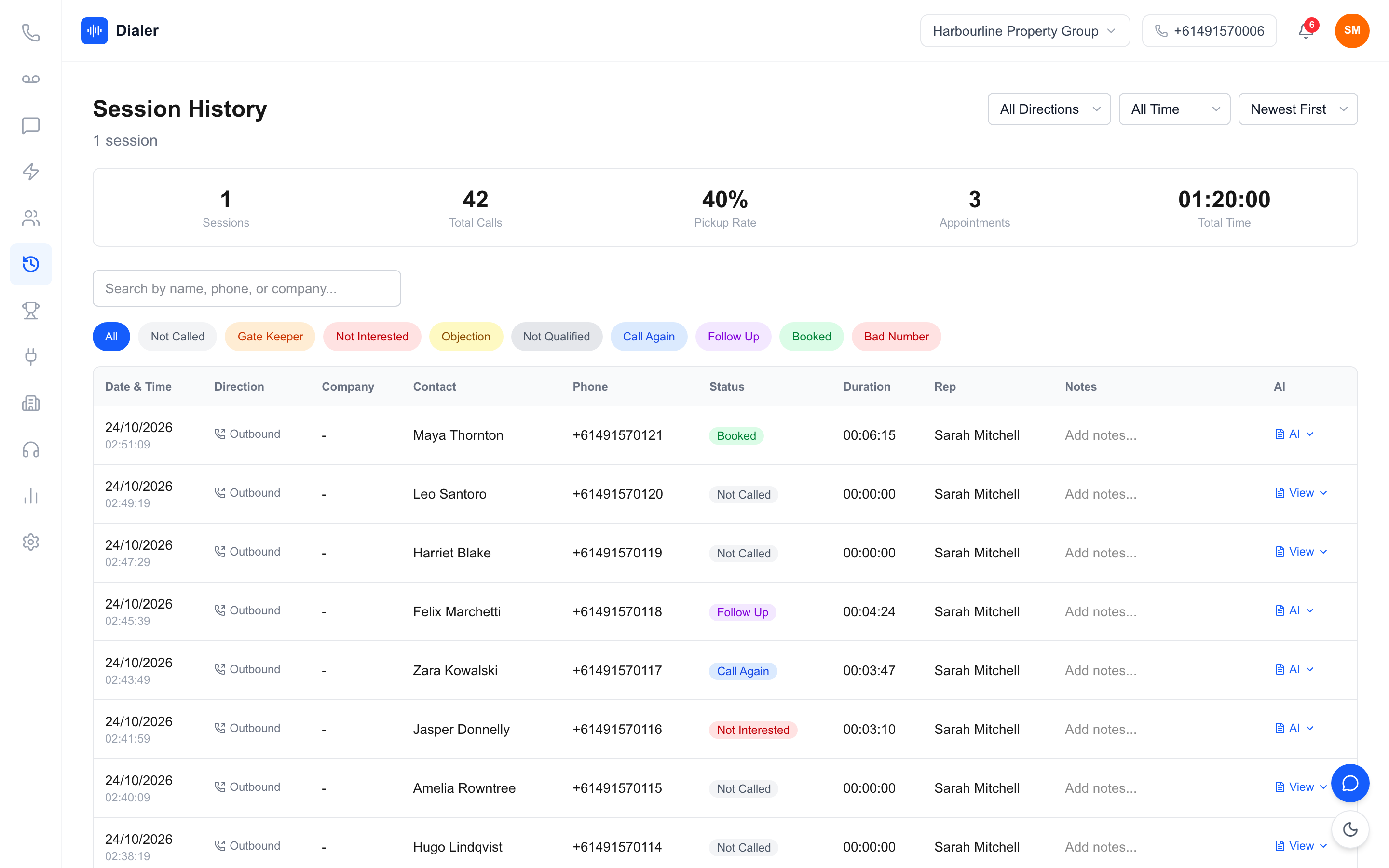
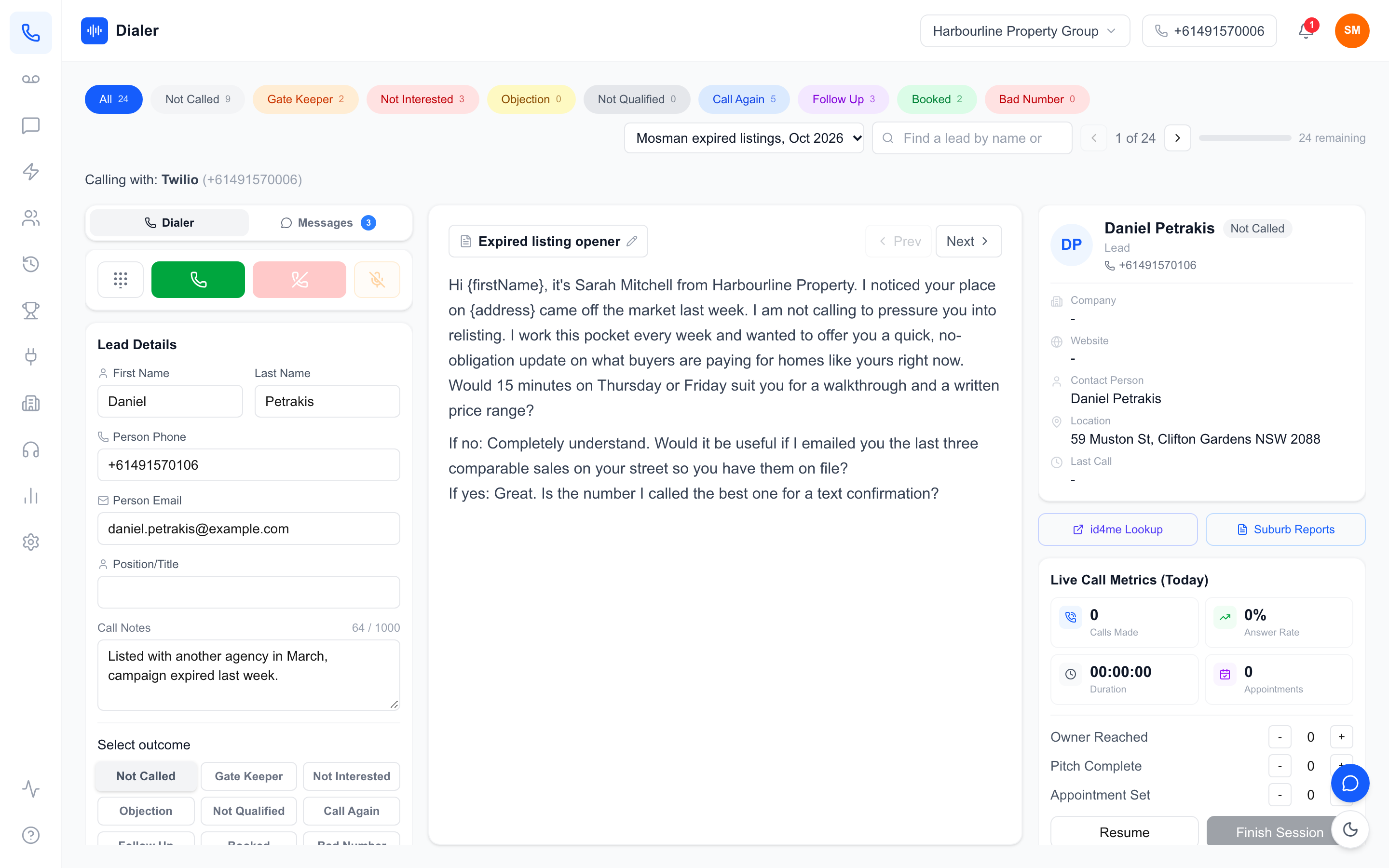
Veyce is a power dialler for Australian sales teams, and recording the result is built into the calling flow. In Power Dialler mode, Veyce rings one lead at a time, and when a call ends the rep marks the outcome on the lead before moving on. The outcomes mirror the list above: Not Called, Gate Keeper, Call Again, Follow Up, Objection, Not Interested, Not Qualified, Booked and Bad Number. Because the outcome is recorded on the lead, the next rep who opens that lead sees where it stands.
Session history and live numbers
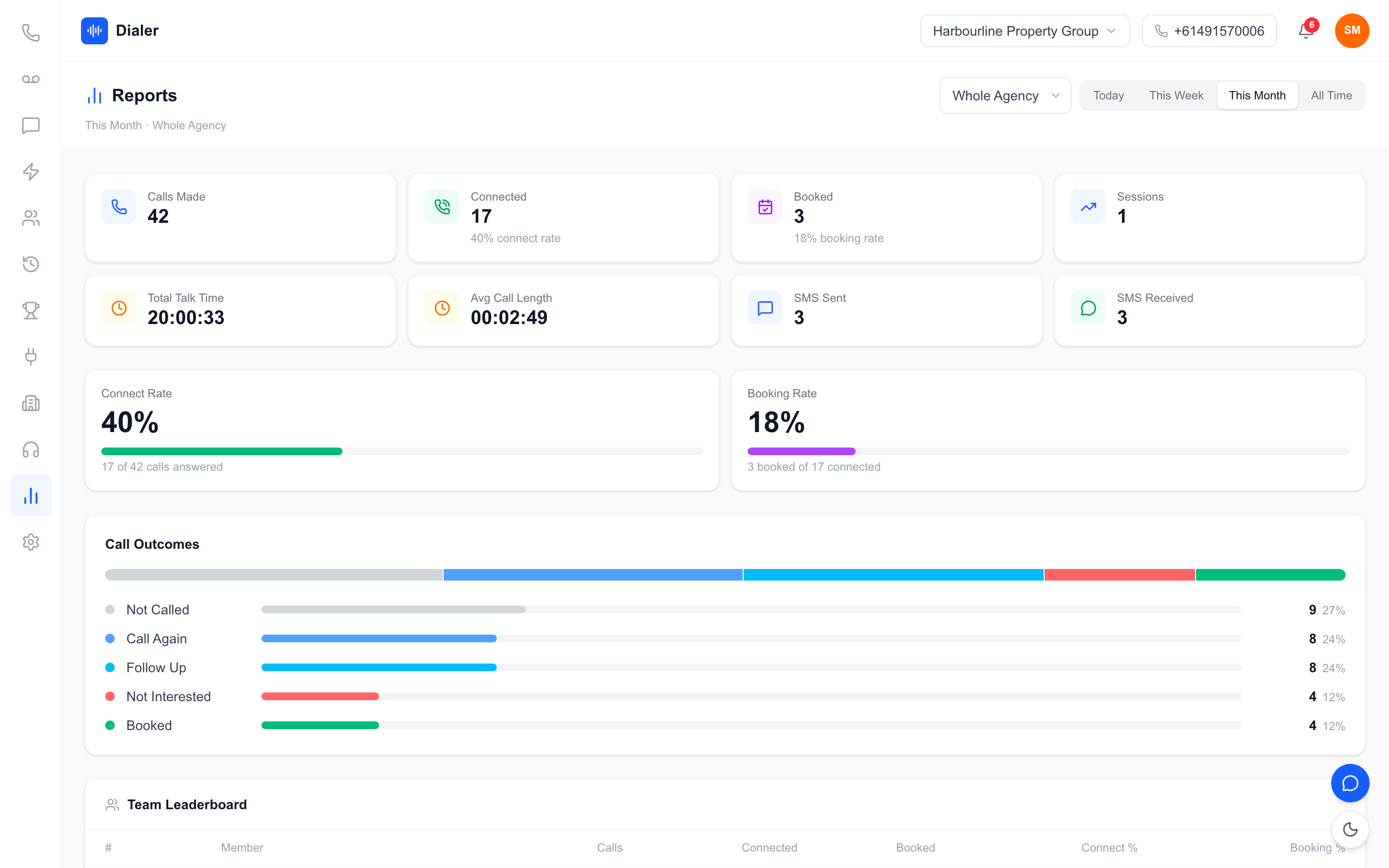
Every calling session is kept in session history with its calls and outcomes, so a rep or a manager can look back at a morning's work and see how it broke down. Live session metrics and leaderboards show activity as it happens, which makes it obvious when a list is producing bad numbers or gatekeepers instead of conversations. Our guide to sales call performance metrics explains which of those numbers deserve a place in a weekly review.
Lists that respect the last outcome
Outcomes also shape who is called next. A lead marked Call Again can be picked up in a later session, and the optional Parallel Dialer add-on on Growth and Agency lets a rep choose whether to include Call Again leads when a session starts. For numbers flagged by your own Do Not Call Register wash, the Delete DNCR Numbers button clears flagged leads from a list. Veyce does not wash numbers itself; it works with the wash you run.
Plans and the free trial
Outcomes, session history and live metrics are part of every plan, from Solo at $49 a month (1 seat, 100 minutes) to Team at $179 (4 seats, 400 minutes), Growth at $449 and Agency at $1,099. Call recording with AI transcripts and summaries after each recorded call comes on Team, Growth and Agency, and is useful for checking that the code a rep picked matches what was said. The free trial runs for 3 days from your first call with 100 calling minutes and no card. Full details are on the plans and pricing page.
Conclusion: put your call disposition codes to work every week
Three checks for the weekly review
Codes only pay off when someone reads them. Once a week, look at three things:
- Outcome mix by list. A list with a high share of Bad Number or Not Qualified is a data problem. Fix the source before you coach the rep.
- Outcome mix by rep. If one rep records twice the team's share of Objection, listen to two or three of their calls. If one rep never records Call Again, ask where the unanswered calls are going.
- Ageing follow-ups. Count the Follow Up and Call Again leads older than a week. That number is revenue waiting on a phone call.
Your next step
Write your list of call disposition codes for sales teams on one page, attach a next action to each, and run it for a fortnight before changing anything. If you want the codes captured as part of the call and not typed up afterwards, Veyce is a power dialler made for Australian teams that records the outcome on every lead as reps work. Start a free trial and run your first coded session today.
Frequently asked questions
What are call disposition codes?
Call disposition codes are short labels that record the result of a phone call, such as booked, call again, not interested or bad number. A rep selects one at the end of each call. The code tells the business what to do next with that lead, feeds the reports managers use, and keeps the calling list clean by separating leads worth another attempt from those that should be rested or removed.
How many call disposition codes should a sales team have?
Most outbound teams work well with eight to ten. Fewer than six and different results get lumped together, so reports stop being useful. More than about twelve and reps stop reading the list and pick whatever is nearest the top. The test is whether each code leads to a different next action. If two codes lead to the same action, merge them into one.
What is the difference between a disposition and a lead status?
A disposition is the result of a single call, while a lead status describes where the lead sits overall. One lead might collect several dispositions over a month, such as call again, gatekeeper and then booked, and its status follows the most recent one. Notes are separate again: they hold the detail a person needs to read before the next call, in a sentence or two.
How do we get reps to use call disposition codes for sales teams consistently?
Make the code part of the call and not an end-of-day task. Give every code a one-line definition and an example, remove any "other" option, and have the rep choose before the next call begins. Then use the data in front of the team each week. Reps record outcomes carefully when they can see those outcomes shaping lists, coaching and recognition.
Does Veyce record call outcomes?
Yes. In Veyce the rep marks an outcome on the lead when a call ends, choosing from Not Called, Gate Keeper, Call Again, Follow Up, Objection, Not Interested, Not Qualified, Booked and Bad Number. Sessions are kept in session history, and live metrics show activity as it happens. The free trial runs for 3 days from your first call with 100 calling minutes and no card.