Most managers who want to improve sales team call activity start by asking for more calls. It rarely works for long. Reps push harder for a week, then the numbers slide back, because nothing about the way they call has changed. Low activity is usually a symptom: of messy lists, slow manual dialling, unclear targets or days that fill up with everything except calling.
This playbook is for Australian sales managers running small outbound teams. It looks at where calling time actually goes, how to remove the friction that keeps dial counts low, how to set goals reps will keep, and how to make activity visible without turning the office into a scoreboard. It also covers the guardrail that keeps activity honest: more calls only matter if they reach the right people at the right time.
Why sales team call activity stalls
Before changing targets, find out what is stopping the calls. In most teams it is one of three things.
Time lost between calls
Manual dialling has hidden costs: finding the next lead, copying the number, waiting through rings that go nowhere, then typing notes. Each step takes seconds, but across a two-hour block they add up to a large share of the session. We compare the two approaches in detail in power dialler vs manual calling.
Lists that are not ready to call
If a rep has to clean the list while calling (removing duplicates, guessing which column is the mobile, skipping numbers that look wrong), activity drops and frustration rises. A bad list also produces bad connect rates, which makes calling feel pointless and lowers effort the next day.
Calling that has no protected time
When calling is "whenever there is a gap", it loses to email, quotes and meetings. Teams with steady activity almost always have fixed calling blocks that the whole team keeps, with the manager defending that time.
How to improve sales team call activity: four levers
Each lever below works on its own, but they compound when you pull them together.
Protect calling blocks
Set two blocks a day, for example 9:30 to 11:30 and 2:00 to 4:00, and keep them free of meetings. Pick times that suit your market: business owners are often easier to reach early, homeowners later in the day. Telemarketing calls in Australia must stay within the permitted calling hours set by the Telemarketing and Research Industry Standard, so plan blocks inside those hours.
Prepare the list the day before
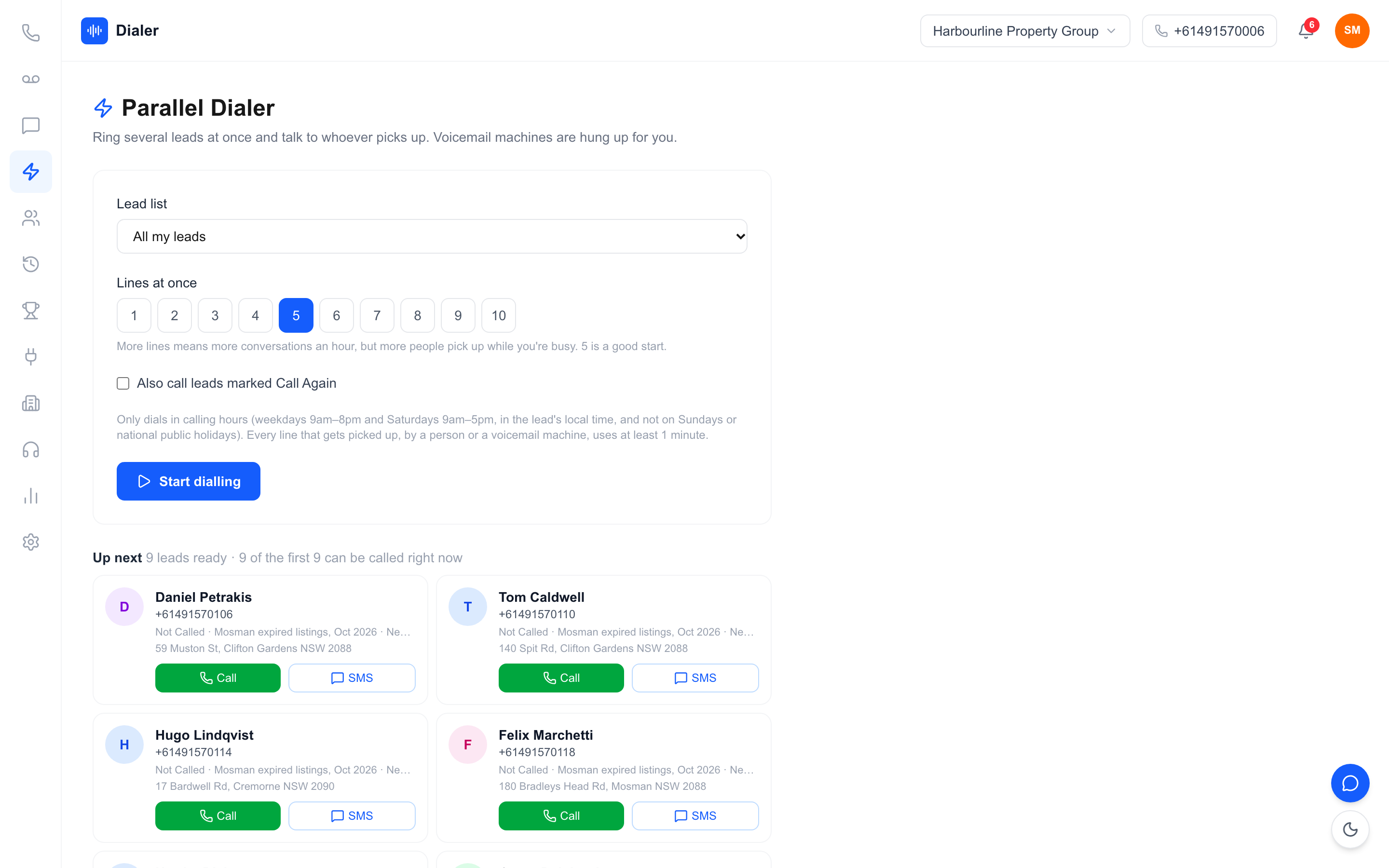
Make list preparation a separate task from calling. Import the list, map the columns, remove duplicates and bad numbers, and wash it against the Do Not Call Register if you are telemarketing. When the block starts, the rep should only need to press start.
Set goals reps can control
Rate goals like "book 10% of conversations" swing with list quality and luck. Activity goals ("two full calling blocks a day", "a set number of calls a week") are within a rep's control, so they hold up. Use outcome goals at team level and activity goals at rep level. If you set a weekly call goal, base it on what your best consistent rep already does, not on a number from another industry.
Make progress visible
Reps keep going when they can see progress during the block, not just at the end of the month. A live count of calls made, answer rate and appointments on the calling screen gives that feedback. A shared leaderboard and a daily streak add a light competitive edge for teams that enjoy it. Start a free 7-day Veyce trial with 50 calling minutes included.
Veyce: tools that keep activity steady
Veyce is a power dialler for Australian sales teams. These are the parts that bear directly on call activity.
Power dialling with the lead and script in view
In Power Dialler mode Veyce dials one lead at a time and auto-advances to the next lead after each call, with the lead's details and your calling script (loaded from Google Docs) on the same screen. The calling screen also shows Live Call Metrics for today: calls made, answer rate, call duration for the session and appointments, with counters reps tap for Owner Reached, Pitch Complete and Appointment Set.
Achievements, streaks and leaderboards
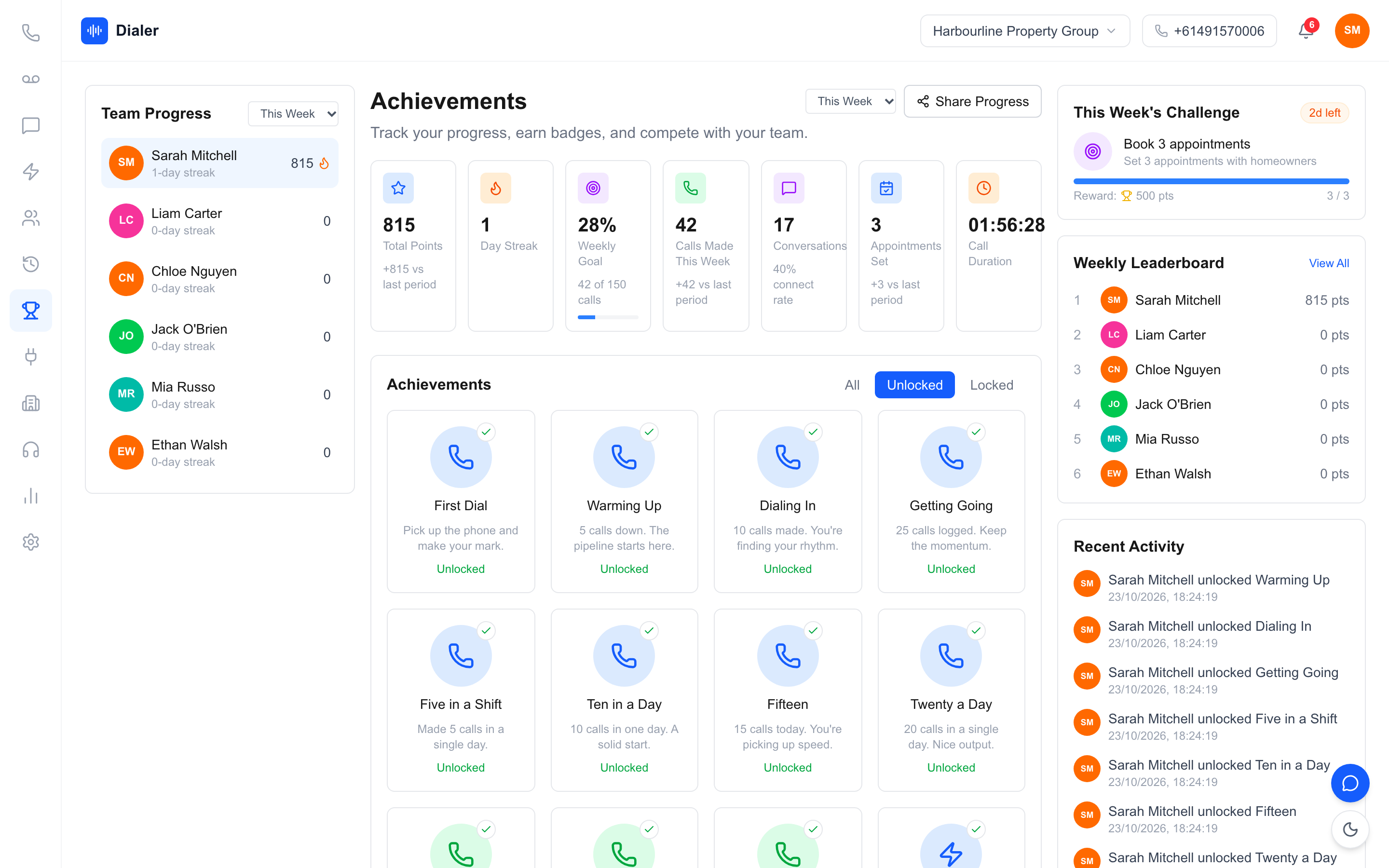
The Achievements page gives each rep total points, a day streak, a weekly goal and their calls made, conversations, appointments set and call duration for the range they choose. Points come from calls, answered calls, owner-reached and pitch-complete taps and appointments. Badges unlock at milestones, and weekly and team leaderboards show where everyone stands.
Lead import that does not eat the morning
Reps can import leads from spreadsheets, PDFs and photos. Import uses OCR and rule-based column mapping, so a list from a supplier or a printout becomes a callable list quickly. Teams that keep their lists in Google Sheets can import them from there on demand. Veyce has no GoHighLevel integration, but a team on GoHighLevel can export its contacts as a CSV and import them.
The Parallel Dialer add-on for larger teams
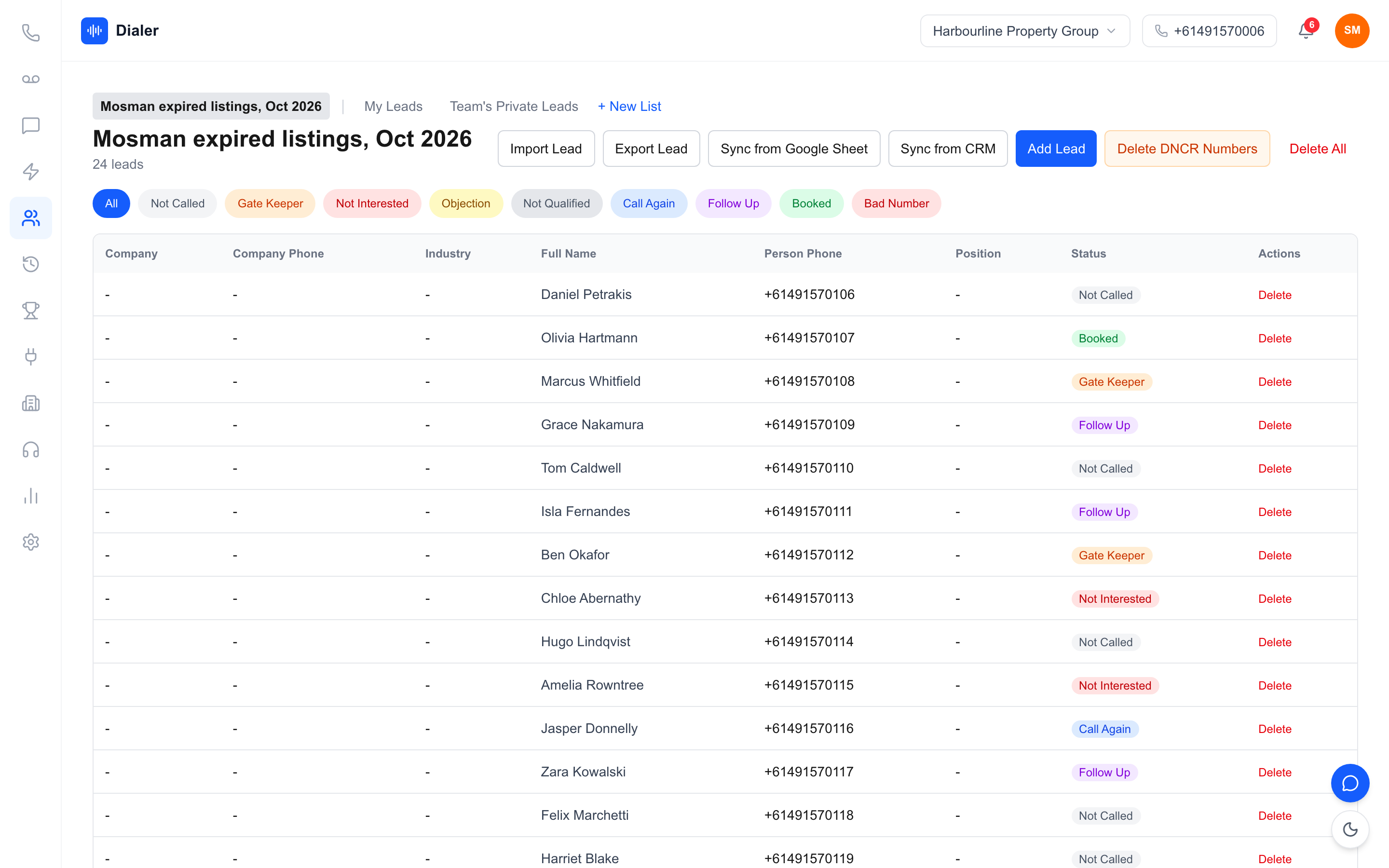
On the Growth and Agency plans, the Parallel Dialer add-on (+$99 a seat) dials up to 5 leads at once on Growth and up to 10 on Agency and connects the rep to whoever answers. It runs weekdays 9am–8pm and Saturdays 9am–5pm, in the lead's local time, with no Sundays or national public holidays.
Keeping more activity from becoming worse activity
Activity is an input. Push it too hard on its own and reps learn to make short, rushed calls that look good on a dashboard and book nothing.
Watch connect rate and booking rate beside call volume
Pair every activity number with two rates: connect rate (connected calls divided by calls made) and booking rate (bookings divided by connected calls). If calls go up and both rates hold, the extra activity is real. If calls go up and booking rate falls, reps may be rushing.
A worked example of the trade-off
These numbers are a worked example with stated assumptions, not a benchmark. Assume a rep moves from 40 to 70 calls a day by switching from manual dialling to a power dialler. If connect rate stays at 25%, conversations rise from 10 to 17.5 a day. If booking rate stays at 10% of conversations, bookings rise from 1 to about 1.75 a day. The point is not the exact numbers; it is that activity gains only pay off when the rates hold.
Keep the list fresh
High activity burns through a list quickly. Plan list supply a week ahead so reps never run out mid-block and start recalling leads too soon. For more on what to say once people pick up, see our cold calling tips for Australian sales teams.
Review activity weekly, not hourly
Live numbers are for reps during the block. Managers get more from a weekly look, because a single day can swing on one poor list or a public holiday in another state. On the Reports page in Veyce, set the period to This Week and compare each rep's calls, connected calls, bookings, connect percentage and booking percentage on the team leaderboard, then click a rep to see their own breakdown, including total talk time and average call length. Ask two questions in each one-on-one: did the planned calling blocks happen, and if not, what got in the way? The answer is usually a meeting, a quote or a list problem, and each of those is something a manager can fix. Treat a quiet week as information about the system before treating it as a performance issue.
Conclusion: steady activity beats a push
To improve sales team call activity for good, fix the system rather than the effort: protected blocks, lists ready the day before, goals reps control, and progress they can see while they call. Then check that the rates hold as volume rises.
To try it with your own team, the Veyce power dialler for Australian teams puts live metrics, achievements and leaderboards beside the dialler. You can compare plans on the Veyce pricing page; the free trial runs for 3 days from your first call, with 100 calling minutes and no card.
Frequently asked questions
How do I improve sales team call activity quickly?
Start by removing friction rather than raising targets. Prepare lists the day before, block two calling sessions a day that nobody books meetings into, and move reps from manual dialling to a power dialler so less time goes on finding and keying numbers. Then show reps their live call count and answer rate during the block. These changes lift activity within a week because they make calling easier, not just more expected.
How many calls should a sales rep make a day?
There is no reliable universal number, because it depends on your market, list quality and how long good conversations run. A better approach is to look at what your most consistent rep already achieves in a protected calling block and set goals from that. Pair the call goal with connect rate and booking rate, so a rep who makes fewer but better calls is not penalised for doing the right thing.
Do leaderboards really improve call activity?
They help many teams because progress becomes visible and a little friendly competition keeps energy up in long calling blocks. They work best when they rank outcomes such as bookings alongside calls, so reps are not rewarded for short, rushed dials. Some reps dislike public ranking, so pair a leaderboard with personal goals and streaks that each rep can track privately against their own past performance.
What does Veyce show reps while they are calling?
The Veyce calling screen has a Live Call Metrics panel for today showing calls made, answer rate, total call time for the session and appointments. Reps can also tap counters for Owner Reached, Pitch Complete and Appointment Set. Each rep only sees their own in-progress session, so numbers are never mixed between people calling at the same time. The Achievements page adds points, a day streak, a weekly goal and leaderboards.
Can I try Veyce before committing my team?
Yes. The free trial runs for 3 days from your first call and includes 100 calling minutes, with no credit card needed. Each trial call ends after 7 minutes. That is enough to import a real list, run a few calling blocks and see the live metrics, achievements and reports with your own calls. After the trial, plans start with Solo at $49 a month for one seat, and Team at $179 a month includes four seats and 400 minutes.